


Key Takeaways
- Traditional knives blend historical craftsmanship with contemporary functionality.
- They hold deep cultural significance, symbolizing heritage and identity.
- Modern adaptations of traditional knives cater to diverse practical applications.
Table of Contents
- Evolution of Traditional Knives
- Cultural Symbolism of Knives
- Modern Adaptations and Uses
- Preserving Traditional Craftsmanship
- Conclusion
Throughout history, traditional knives have played a critical role in daily life and cultural identity. While these blades were originally developed for survival, combat, or ceremonial purposes, they have found a new place in the modern world. Today, traditional knives are admired not just for their utility but for their artistry and craftsmanship, especially in regions where local artisans still produce knives made in Texas that honor longstanding techniques while meeting contemporary needs. Modern appreciation for traditional knives extends beyond mere functionality. Many collectors, outdoor enthusiasts, and cultural historians value these blades as living artifacts. Traditional knives encapsulate the wisdom of generations, serving as bridges between past and present. Their enduring appeal lies in their ability to evolve while maintaining a deep connection to heritage and community.
Evolution of Traditional Knives
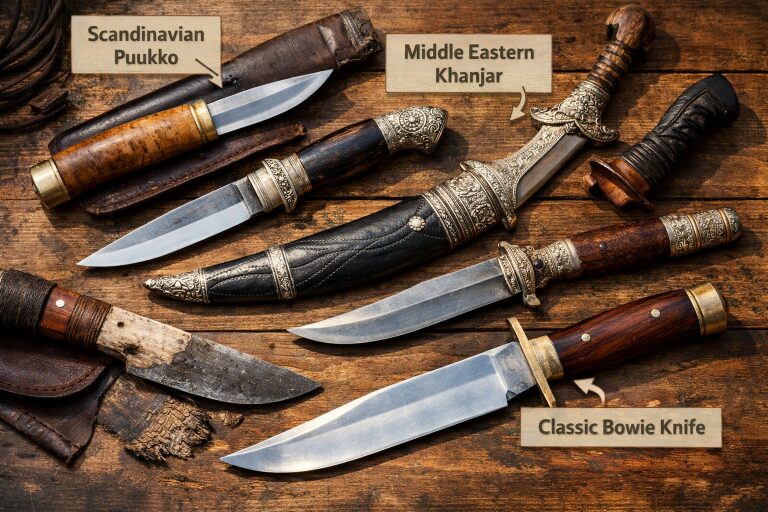
The story of traditional knives is one of constant adaptation. Originating as rudimentary tools of bone and stone, knives became expressions of technological mastery once metallurgy was introduced. Over centuries, regional styles emerged in response to unique environments and social factors. For example, the compact, curved design of the Scandinavian Puukko was perfectly suited to woodworking and hunting in the harsh northern forests. At the same time, knives from the Middle East, such as the ornate Khanjar and Jambiya, served both as tools and as status symbols.
Modern iterations emphasize durability, aesthetic appeal, and versatility. Knife makers blend high-performance materials such as stainless steel and carbon composites with traditional design elements, ensuring these tools remain relevant. The evolution of the knife is thus a testament to the innovation of countless generations, who perfected their craft while responding to the changing needs of their societies.
Cultural Symbolism of Knives
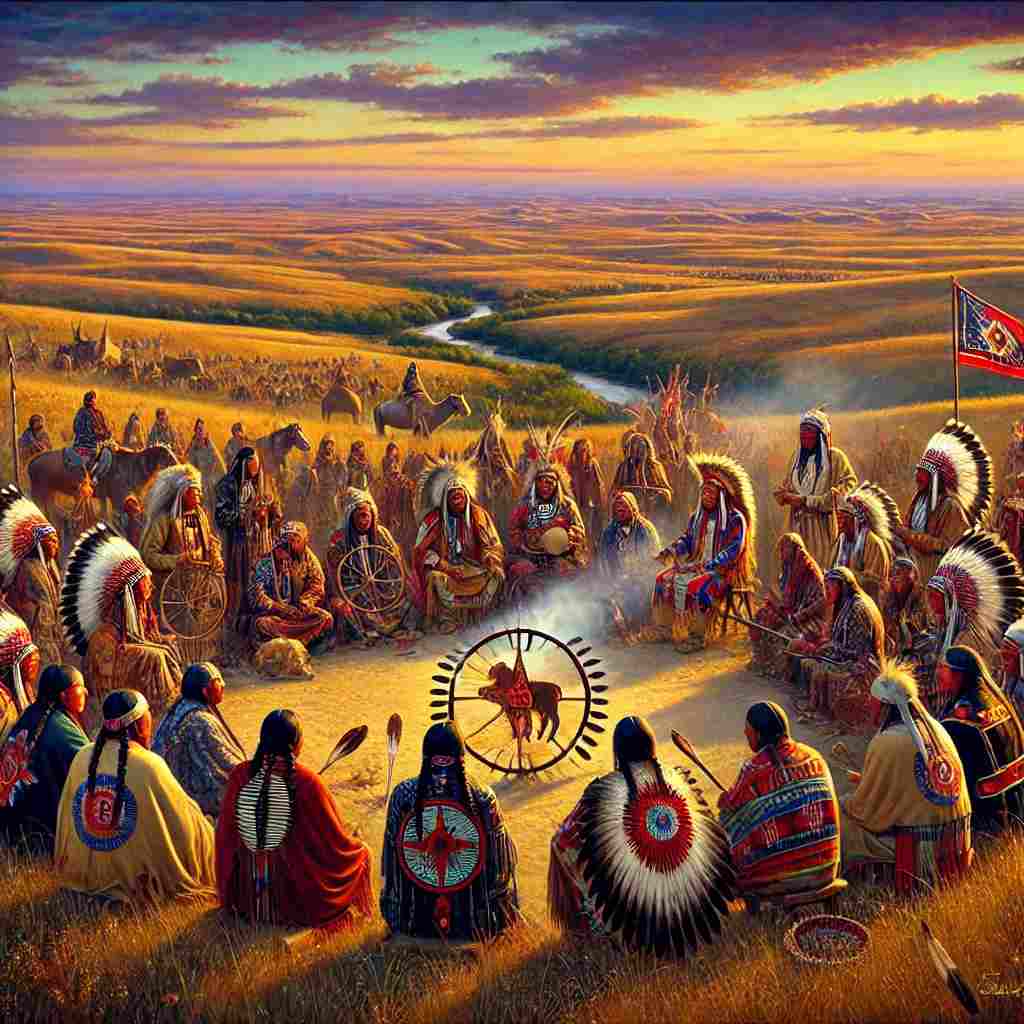
The significance of traditional knives extends well beyond practical use. Knives have acted as symbols of power, community, and transformation. In cultures from Africa to the Americas, specific knives are reserved for ceremonies such as weddings, coming-of-age rites, and harvest festivals. During the Middle Ages, daggers denoted rank and were often presented as tokens of trust or brotherhood among European nobility and knights. In Japan, the ritual presentation of a tanto was a mark of deep respect and trust. Contemporary society continues to value the symbolic dimension of knives. For many Indigenous communities, knives play a role in maintaining traditional ways of life and carrying forward ancestral knowledge. Decorative or heirloom knives are passed down as family treasures, strengthening a sense of identity and continuity.
Modern Adaptations and Uses
Traditional knife designs have had a significant influence on the development of modern tools. Today, outdoor equipment and utility knives reflect the functional principles and enduring shapes of their predecessors. For instance, the sturdy drop-point blade, widely favored among hunters, traces its lineage to the legendary Bowie knife, famed for its versatility in the American frontier. Military, culinary, and even rescue knives routinely borrow from traditional forms, finding new uses in law enforcement, survivalism, and everyday carry. In addition to these practical roles, many makers incorporate traditional motifs into custom knives for collectors and enthusiasts. Modern blades might feature intricate engravings, inlaid handles, or materials sourced from historically significant regions. Advanced manufacturing processes such as CNC machining and powder metallurgy have enhanced the precision, strength, and longevity of these knives. Still, the heart of many modern blades lies in their respect for traditional design principles.
Preserving Traditional Craftsmanship
Despite the growth of industrial knife production, there is a resurgent interest in handmade blades crafted with time-honored techniques. Artisans, particularly in regions like Japan, Scandinavia, and Texas, uphold traditions by forging blades using centuries-old practices, including differential hardening and elaborate hand-finishing. This dedication to craftsmanship not only fosters a deeper connection between maker and user but also ensures the survival of rare skills that would otherwise be lost. Collectors and chefs alike often seek out these handcrafted knives, appreciating them as functional works of art. The forged blade is as much a legacy as it is a tool, carrying stories of place, technique, and personal lineage. Supporting traditional craftsmanship helps sustain local economies and passes vital knowledge to new generations, reinforcing cultural heritage in a rapidly globalizing world.
Conclusion
Traditional knives stand at the crossroads of history, art, and daily life. Their evolution is a reminder of humanity’s resourcefulness, while their symbolism connects us to our shared past. Modern collections and uses reflect ongoing creativity and adaptation, attesting to the enduring value of these extraordinary tools. By supporting artisan makers and respecting the craft, we protect the cultural significance and artisanal wisdom that traditional knives continue to represent for communities everywhere.
- How to Build Realistic Product Color Variants From One Photo
- How To Design Trustworthy Real-Time AI Avatars For Public-Facing Services
- TechTrendery.com: A Complete Guide to Technology, AI, Business and Digital Trends
- Jeroen Dik: Biography, JD Engineering, Automotive Tuning and Racing Career
- Osteopur: The Ingredients, Bone Health, Benefits, Safety, and What to Know