

Key Takeaways
- Agree on clear payment terms and project scope before work begins.
- Document every detail related to work progress, deliveries, and billing.
- Leverage digital tools to simplify, track, and verify payments and deliveries.
- Prioritize two-way communication to minimize errors or misinterpretations.
- Implement thorough quality checks before and during delivery.
Successfully managing concrete delivery in construction projects means more than just coordinating trucks and materials. Contractors must communicate openly and plan meticulously, particularly because legal requirements such as Florida construction lien laws can significantly impact payment timelines and responsibilities. To avoid unnecessary delays, misunderstandings, or costly disputes, it is vital to apply strategic business practices across all project phases.
Concrete delivery often involves multiple stakeholders, including suppliers, project managers, and site crews. With each party relying on others for timely information and payment, transparency and rigorous documentation become essential. Clear contracts, real-time tracking, and effective team training are key steps for reducing friction and promoting trust. Regular oversight and prompt troubleshooting further ensure that projects stay on track from initial pour to final sign-off.
Planning for smooth delivery is just the start. Consistently applying best practices at each touchpoint can have a compounding effect, strengthening relationships and reputations within the industry. Taking a proactive stance helps contractors prevent payment disputes while still upholding quality and safety standards in all deliveries.
By collaborating with concrete delivery experts, contractors gain access to personalized service and up-to-date insights, further reducing the risks associated with complex delivery logistics.
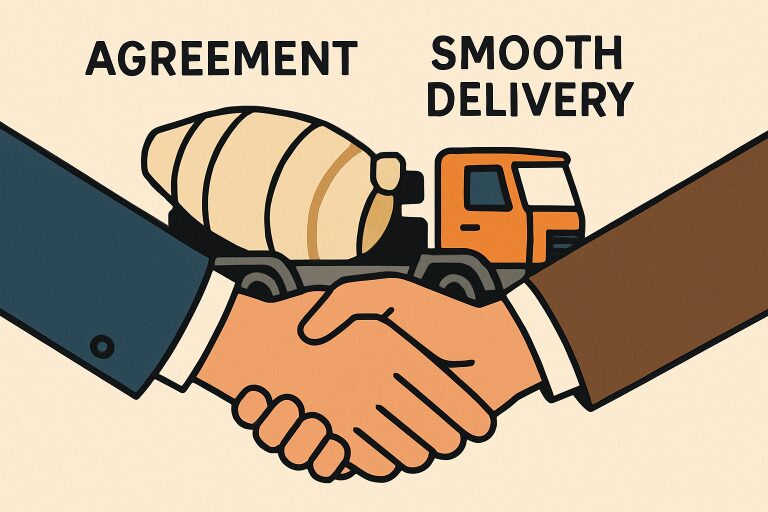
Establish Clear Payment Terms and Project Expectations
Every successful construction project relies on clarity around financial arrangements and deliverables. At the project outset, contractors and clients should discuss all aspects of payment, including billing milestones, due dates, deposits, and acceptable payment methods. Detailing these points in a written agreement promotes transparency and helps prevent disputes rooted in vague or misunderstood expectations. Providing clients with upfront estimates or itemized proposals gives them visibility over anticipated costs and scope. This approach aligns all parties and reduces the risk of friction as the project proceeds.
Maintain Detailed Documentation
Accurate and thorough documentation supports both billing clarity and project verification. Contractors should record daily activities, materials used, change orders, and delivery logs to create a paper trail for reference in the event of disagreements. Transparent invoicing practices that clearly outline labor, materials, and any additional costs reinforce the legitimacy of each charge. Detailed documentation not only streamlines audits and reconciliations but also demonstrates accountability to clients, lowering the risk of contested payments.
Utilize Technology for Efficient Invoicing
Modern invoicing tools and automated systems transform how construction teams manage project finances. Digital solutions enable the automatic calculation, distribution, and tracking of payments to subcontractors, significantly reducing manual errors and speeding up payment cycles. These technologies provide instant access to billing and delivery records, simplifying the commercial valuation process and increasing accountability. Automating invoice approvals and integrating proof-of-delivery documentation into a single dashboard brings speed and accuracy to every transaction.
Ensure Effective Communication
Miscommunication remains one of the main causes of concrete delivery delays and payment disputes. Establishing a single source of truth, such as a centralized project management platform, enables teams to document specifications, schedules, and required changes in writing. This includes verifying the mix type, order volume, desired delivery time, and key contact details, and obtaining acknowledgment from all stakeholders. Clear, proactive communication ensures that the correct products and accurate records reach the site on time, minimizing potential misunderstandings.
Implement Quality Control Measures
Delivering concrete in accordance with project specifications is essential for both structural integrity and client satisfaction. Before dispatching a delivery, contractors should confirm that the mix design, aggregate sizing, water content, and additives meet the agreed standards. Verifying these parameters before the truck leaves the plant reduces the risk of costly rework or disputes over off-spec materials. Frequent sampling and onsite testing further ensure compliance and enable early detection of issues.
Monitor Weather Conditions
Unpredictable weather poses a significant challenge to the timely, high-quality delivery of concrete. Rain, excessive heat, or freezing temperatures can alter curing rates or even damage a pour in progress. By closely monitoring local forecasts, contractors can adjust schedules or protection plans as needed. Laying out contingencies, such as heated enclosures or moisture barriers, reduces the risk of weather-related concrete failures and associated payment conflicts.
Educate and Train Staff
Staff training has a direct impact on safety, efficiency, and overall project outcomes. Teaching crews about safe load securement, on-site inspection protocols, and proper equipment handling not only protects workers but also safeguards deliveries from damage or loss. A focus on pre-unloading safety checks and regular knowledge refreshers ensures that each team member is prepared to handle unique job site demands, reducing the risk of claims and financial disputes.
Leverage Electronic Proof of Delivery
Replacing handwritten logs with digital proof streamlines verification and verifies successful deliveries through signatures, photos, and tracking, reducing errors. Consistent application of these principles fosters trust, efficiency, and transparency, preventing disputes and supporting lasting professional relationships and successful projects.
Conclusion
In construction, preventing payment disputes and delivery conflicts requires structured processes, clear documentation, and consistent communication. Early expectation setting, accurate records, and reliable technology reduce misunderstandings. Using digital invoicing, electronic proof of delivery, and centralized communication enhances transparency. Quality control, weather prep, and staff training ensure materials meet specs and arrive safely. Managing financial and operational details proactively creates a predictable environment, reduces risk, and builds stakeholder trust, enabling smoother transactions, better relationships, and successful projects.