


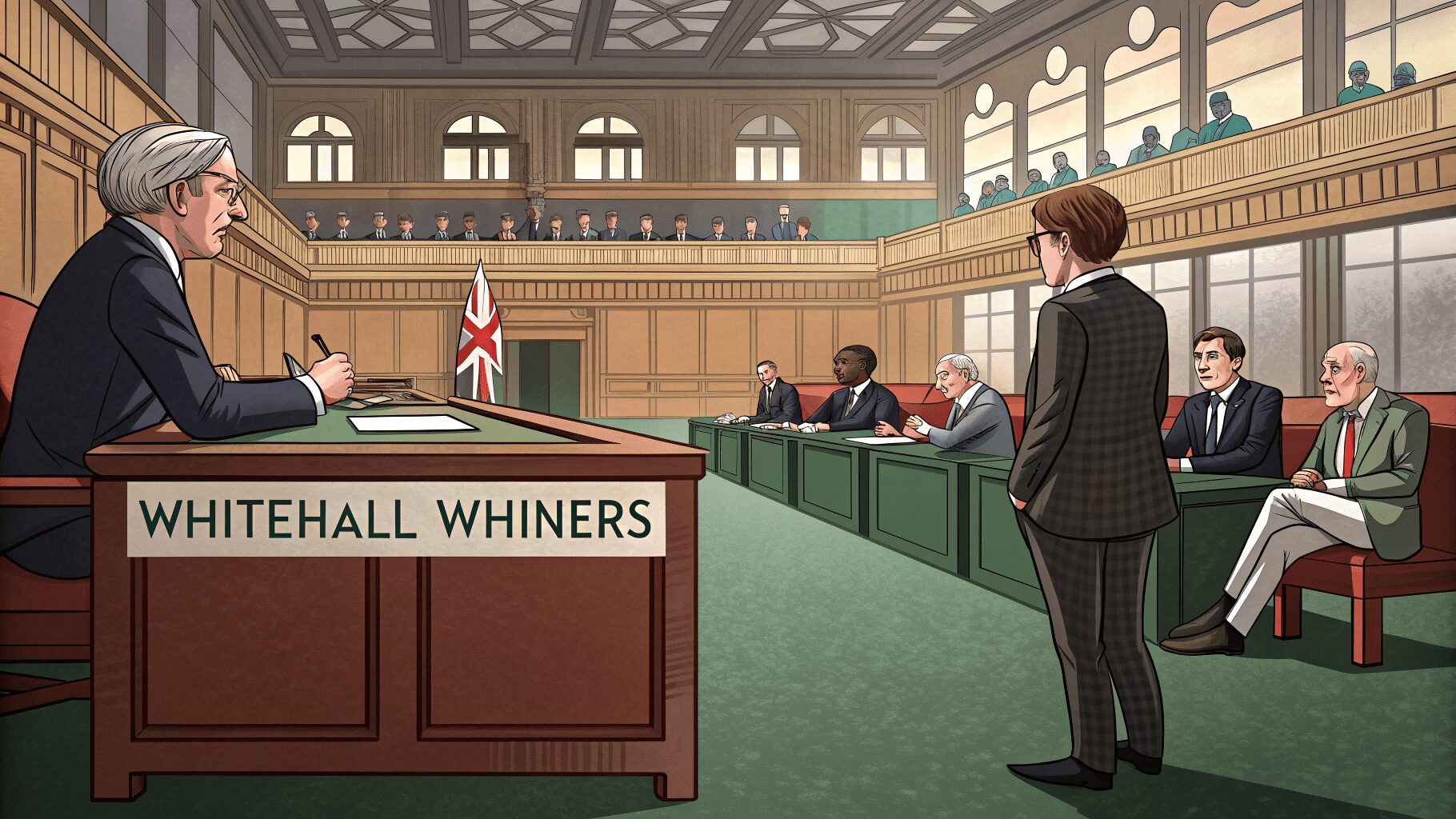

The phrase “Whitehall Whiners” has emerged as a sharp critique aimed at UK civil servants who are perceived as resistant to political reform or overly critical of ministerial decisions. Though it may sound humorous, the label reflects deeper tensions between elected officials seeking swift policy changes and bureaucrats tasked with careful implementation. This term has gained traction in media, political debates, and public discourse, often framing administrative caution as unnecessary obstruction. Understanding the origins, usage, and implications of this phrase offers insight into broader questions about governance, power struggles, and the role of accountability in modern British democracy.
Who Are the Whitehall Whiners?
The term “Whitehall Whiners” refers to individuals within the British civil service or political establishment who are seen as excessively complaining about government policies, reforms, or public scrutiny. Often, these individuals are accused of resisting change, particularly when new ministers or leadership push for radical overhauls in policy or operational structure. The phrase is most commonly used in media and political debates to label those perceived as obstructive within Whitehall—the historic center of the UK’s government.
While the term sounds humorous, it has become a serious rhetorical tool in UK political discourse. Critics argue that branding individuals as “Whitehall Whiners” delegitimizes valid concerns raised by experienced civil servants. Supporters of the phrase claim it helps expose those clinging to outdated bureaucracy. Whether a term of mockery or caution, it highlights the tensions between elected officials seeking change and the administrative machinery tasked with delivering it.
Origin of the Term “Whitehall Whiners”
The phrase “Whitehall Whiners” likely originated in the UK tabloid press, where colorful and often provocative language is used to capture public attention. It gained prominence in the 2010s during periods of political upheaval, particularly as government ministers clashed with senior civil servants over Brexit, austerity policies, and public accountability. The term became shorthand for bureaucrats seen as obstructing progress or resisting reforms initiated by ministers.
Over time, the phrase was adopted by politicians and commentators who wished to frame resistance from Whitehall as self-serving or overly sensitive. It’s not a formal classification, but rather a politically charged label used in opinion pieces, interviews, and televised debates. The term has since embedded itself into UK political culture, frequently invoked during policy conflicts or inquiries. Though often dismissed as media exaggeration, it reflects broader frustrations about slow-moving governance and perceived inertia within the civil service.
Political Context Behind the Phrase
The phrase “Whitehall Whiners” emerges from a politically charged landscape in which elected officials and career civil servants often have conflicting agendas. Ministers, seeking to implement their party’s vision quickly, may face resistance from long-standing bureaucrats concerned with legality, feasibility, or precedent. This tension creates fertile ground for accusations of obstruction, with some politicians labeling critics as “whiners” who resist democratic will.
The political context is especially heightened during times of national change, such as Brexit, COVID-19 responses, or sweeping policy shifts. In these moments, frustrations with bureaucracy can boil over, leading to public outbursts and media headlines targeting internal dissent. While some see this as holding unaccountable officials in check, others believe it damages institutional trust. The phrase, therefore, is not just about complaints—it encapsulates the broader ideological divide between rapid political reform and careful administrative caution.
Common Targets of the Whitehall Whiners Label
Those most commonly branded as “Whitehall Whiners” are senior civil servants, departmental advisors, and occasionally permanent secretaries who voice concerns about government decisions. These individuals often operate behind the scenes but wield significant influence in shaping or delaying policy. When their warnings or internal memos become public, they can quickly find themselves portrayed as barriers to progress rather than guardians of stability.
Ministers who feel frustrated by red tape or slow decision-making are usually the ones pushing this label. It’s used to marginalize internal dissent and rally public opinion behind a reform agenda. However, this branding can unfairly damage reputations, particularly when concerns were raised in good faith. The individuals labeled may also be scapegoated for broader system inefficiencies. While some may indeed resist change unnecessarily, lumping all critics under the term “whiners” oversimplifies the complex dynamics of policymaking.
Whitehall Whiners and Civil Service Tensions
The use of the “Whitehall Whiners” label has intensified long-standing tensions between politicians and the civil service. At its core, the civil service exists to provide impartial advice and ensure that policies are implemented responsibly. However, when civil servants express reservations, especially in turbulent political environments, their input can be perceived as disloyal or obstructive by ambitious ministers.
This friction erodes trust between ministers and officials, making collaboration more difficult. Civil servants may become hesitant to speak truth to power, fearing backlash or media exposure. Over time, this atmosphere can create a toxic workplace culture, hinder innovation, and lead to a brain drain of talent. While healthy disagreement is essential for sound governance, the “Whitehall Whiners” narrative threatens to suppress it entirely. Instead of fostering productive debate, it encourages silence and compliance, which ultimately weakens the quality of government decision-making.
How Media Uses the Term “Whitehall Whiners”
British tabloids and political commentators have played a pivotal role in popularizing the term “Whitehall Whiners.” The phrase is often deployed in headlines and opinion pieces to dramatize internal disputes between civil servants and ministers. It fits neatly into narratives about bloated bureaucracy, government inefficiency, and unelected officials overstepping their remit. As such, it’s a powerful tool for stirring public sentiment.
However, this media usage can also distort public understanding of internal government dynamics. By portraying all dissent as whining, complex policy concerns are reduced to personal squabbles. This risks oversimplifying serious governance issues, encouraging viewers and readers to dismiss valid institutional warnings. Moreover, the media rarely provides follow-up when such “whining” turns out to be well-founded. Thus, the term’s sensational appeal often comes at the expense of accuracy and accountability in reporting.
Public Reactions to Whitehall Whiners Commentary
Public opinion around the term “Whitehall Whiners” is often divided. Some members of the public resonate with the idea that civil servants are too slow, unaccountable, or unwilling to accept political change. To these individuals, the phrase reinforces existing frustrations about government inefficiency and validates calls for administrative reform or downsizing.
On the other hand, many citizens view the term as an unfair attack on hardworking professionals. For them, civil servants are seen as experts maintaining order, continuity, and legality amidst political chaos. They believe dismissing valid concerns as “whining” discourages transparency and punishes integrity. As such, the term can polarize voters depending on their broader trust in government institutions. This division is often reflected in social media debates, public opinion polls, and letters to newspapers, making the phrase not just a political device but a cultural flashpoint in ongoing debates about governance.
Key Politicians Involved in the Whitehall Whiners Debate
Several high-profile UK politicians have invoked the “Whitehall Whiners” label in recent years. Ministers pushing for radical changes—especially during the Brexit transition or COVID-19 crisis—have clashed publicly with senior civil servants, sometimes accusing them of slowing down progress. Politicians such as Dominic Cummings, Boris Johnson, and Jacob Rees-Mogg have been linked to criticisms that echo the language of this phrase.
These politicians argue that reform is being deliberately stalled by an entrenched bureaucracy unwilling to accept democratic mandates. On the flip side, opposition figures and former civil service leaders often rush to defend those targeted, accusing ministers of bullying or undermining public trust. The result is a high-stakes tug-of-war between elected authority and institutional continuity. Each political side uses the phrase “Whitehall Whiners” either as an attack or a badge of injustice, shaping how the public interprets administrative resistance.
Impact of Whitehall Whining on Policy Making
The accusation of “Whitehall Whining” can significantly affect the policymaking process. When civil servants fear being labeled negatively, they may self-censor, avoid confrontation, or fail to offer full analysis to decision-makers. This can lead to poorly informed policies that ignore practical or legal realities, resulting in flawed implementation or judicial pushback.
Conversely, the term can also accelerate decision-making when used by ministers to cut through what they see as unnecessary bureaucratic delays. However, such a rush often bypasses crucial institutional knowledge. The friction can also stall cooperation between departments, reduce morale, and increase staff turnover—further weakening policy execution. While the term might offer short-term rhetorical gain, it often creates long-term governance challenges. The healthiest policy environments thrive on constructive challenge, and using language that undermines this balance can backfire in unexpected ways.
Satire and Humor Around Whitehall Whiners
Like many phrases in British politics, “Whitehall Whiners” has found its way into satire, television comedy, and political cartoons. Satirical programs such as Have I Got News for You or The Thick of It often mock the absurdity of the term, portraying civil servants as cartoonishly sensitive or ministers as unjust bullies. This humor reflects deeper public skepticism about how politics is conducted behind closed doors.
In editorial cartoons, the “Whitehall Whiner” is often depicted as a bureaucrat clutching stacks of paper, weeping over red tape, or hiding from decision-making. These exaggerated depictions highlight the disconnect between public perception and internal realities. While satire adds levity to politics, it can also reinforce stereotypes, making it harder for civil servants to be taken seriously when raising legitimate concerns. Thus, comedy and critique blur together in shaping how the term is understood.
Whitehall Whiners in Parliamentary Discourse
While not a formal term in legislative language, “Whitehall Whiners” occasionally appears in debates, interviews, and press briefings involving Members of Parliament. It is typically used informally to express frustration with internal resistance or to discredit criticism from within government departments. When politicians use the term publicly, it sends a strong message that dissent is not welcome—even if unintentional.
Such language can damage parliamentary norms, where respectful debate and evidence-based scrutiny are supposed to guide policy. Labeling civil service input as “whining” risks undermining the principle of impartial advice. Additionally, it may lead to fewer whistleblowers coming forward, fewer risk assessments being properly conducted, and an overall decline in institutional transparency. Parliamentary systems rely on robust checks and balances, and reducing opposition voices through mockery can tilt the system away from democratic ideals toward authoritarian tendencies.
Criticism and Defense of Whitehall Whiners
Critics of the “Whitehall Whiners” term argue that it silences important internal feedback. They believe the phrase is used to delegitimize whistleblowers and experienced professionals trying to flag serious issues. By painting these individuals as petty or obstructionist, government leaders avoid accountability and reduce transparency in the policymaking process.
In contrast, defenders of the phrase say it helps highlight how entrenched interests within the civil service often resist much-needed reform. They argue that bureaucratic cultures can become too risk-averse, preferring routine over innovation. In this context, calling out “whining” is seen as a way to accelerate progress and remind officials of their duty to implement elected policies. The debate, ultimately, centers on differing views of governance—whether to prioritize swift execution or careful deliberation. Both perspectives have merit, but balance is crucial to avoid undermining democratic institutions.
How the Term Shapes Public Perception of Governance
The repeated use of “Whitehall Whiners” in public discourse shapes how ordinary citizens view government operations. For some, it confirms long-held suspicions that officials are inefficient, overpaid, and unwilling to embrace change. This perception can fuel anti-government sentiment, skepticism about civil service roles, and support for drastic administrative reforms.
On the other hand, it also raises awareness about the internal challenges faced by those working in government. When the term is seen as unjust, it can prompt sympathy and support for civil servants and watchdogs. The duality of the term means it’s both a weapon and a mirror—it reflects public frustration while simultaneously driving new narratives. In either case, it influences voting behavior, media trust, and expectations from elected leaders. How the phrase is used and perceived can therefore impact not just image, but also real policy outcomes and governance standards.
Future of the Whitehall Whiners Narrative in UK Politics
As UK politics continues to evolve, the future of the “Whitehall Whiners” narrative will likely depend on shifts in leadership style, media behavior, and civil service reform. If trust between ministers and civil servants can be restored through transparent dialogue and mutual respect, the need for such derogatory labels may fade. Constructive governance thrives when both sides feel heard and valued.
However, if polarization increases and politicians continue to weaponize language for short-term gain, the term may become even more common. This could entrench divisions, drive public servants away, and reduce the overall effectiveness of government. Whether the phrase becomes a relic or a recurring theme depends on how future administrations choose to engage with their institutions. Ultimately, the choice lies in whether they see internal criticism as a problem—or as a necessary part of democratic governance.
FAQ’s
What does the term “Whitehall Whiners” mean?
“Whitehall Whiners” refers to civil servants in the UK who are accused of complaining about or resisting government reforms, especially those coming from ministers pushing for rapid change.
Where did the phrase “Whitehall Whiners” come from?
The phrase emerged from UK media during political conflicts and was popularized by commentators and politicians frustrated with internal bureaucratic resistance to new policies.
Why is the term controversial in British politics?
It’s controversial because it can delegitimize valid concerns raised by professionals, framing reasonable objections as obstruction and undermining institutional integrity and accountability.
Who typically uses the term “Whitehall Whiners”?
The term is commonly used by politicians and certain media figures who want to portray internal dissent as unhelpful or resistant to democratic mandates.
How does this term affect civil service morale?
It negatively impacts morale by discouraging open discussion, promoting fear of backlash, and making civil servants less willing to voice important concerns or advice.
Conclusion:
“Whitehall Whiners” is more than just a political jab—it symbolizes ongoing conflict between reformist politicians and cautious civil servants within the UK government. While the phrase may rally support for rapid change, it risks undermining expert advice and institutional balance. When dissent is dismissed as whining, genuine concerns may be ignored, leading to flawed decisions. A democratic system depends on open dialogue and mutual respect between those who govern and those who implement. Moving forward, UK politics must prioritize cooperation over confrontation, ensuring that both innovation and institutional wisdom shape policy outcomes for the public good.
Related Post: