


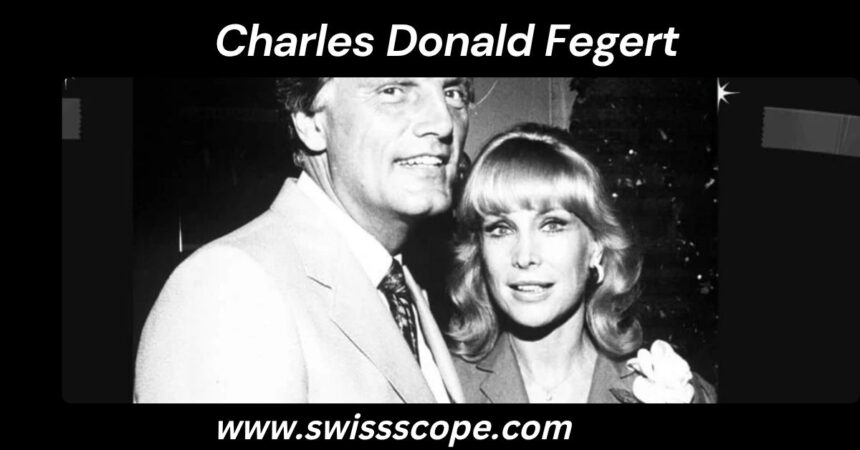

Charles Donald Fegert was a Chicago-based advertising executive whose career unfolded during a major era in American newspaper history. His professional journey, connection to leading Chicago newspapers, and later marriage to actress Barbara Eden created a life that crossed the worlds of business, media, and entertainment. Although he is often remembered because of his relationship with the I Dream of Jeannie star, his own career and experiences offer a broader story worth exploring.
Who Was Charles Donald Fegert?
Charles Donald Fegert was an American advertising executive whose professional life was closely connected with the Chicago newspaper industry. He is remembered today mainly because he was the second husband of actress Barbara Eden, the television star best known for playing Jeannie in the classic sitcom I Dream of Jeannie.
However, looking at Charles Donald Fegert only through his marriage to a famous actress gives an incomplete picture. Before his name became connected with Hollywood, he had already built a substantial career in advertising and newspaper management. Contemporary records identify him as an advertising manager and executive associated with the Chicago Sun-Times and Chicago Daily News. In 1972, the Congressional Record specifically identified Charles Fegert as the advertising manager of both newspapers while discussing an advertising policy adopted by the publications.
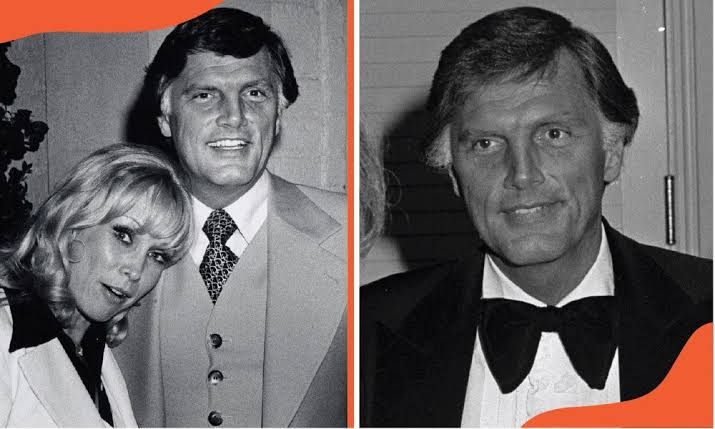
Public records and later biographical sources commonly give his birth date as November 8, 1930, in Chicago, Illinois, and his death date as September 25, 2002, also in Chicago. A Find a Grave index preserved through Ancestry lists those dates and identifies his parents as Charles Fegert and Virginia A. Coppinger.
His story is interesting for another reason. It brings together several parts of American life during the second half of the 20th century: the rise of large city newspapers, the importance of print advertising, the growth of television celebrity, changing ideas about marriage and public life, and the way a private individual can become permanently associated with a famous person.
This article examines Charles Donald Fegert from that wider perspective. It separates better-documented facts from details that appear mainly in later online biographies, explains why some information about him is inconsistent, and looks at what his career tells us about the American media business of his era.
Charles Donald Fegert Quick Facts
Charles Donald Fegert is commonly identified by the following basic details:
- Full name: Charles Donald Fegert
- Common name: Charles Fegert or Chuck Fegert
- Born: November 8, 1930
- Birthplace: Chicago, Illinois
- Died: September 25, 2002
- Place of death: Chicago, Illinois
- Profession: Advertising and newspaper executive
- Major professional connection: Chicago Sun-Times and Chicago Daily News
- Known publicly for: His marriage to actress Barbara Eden
- Marriage to Barbara Eden: 1977
- Separation: 1982
- Divorce: Sources differ between 1982 and 1983
- Age at death according to the commonly cited dates: 71
- Nationality: American
The birth and death dates are supported by a memorial index, while the marriage dates are documented by biographical sources covering Barbara Eden’s life.
One important point is that online biographies do not always agree on every detail. Some list the divorce as 1982, while others give 1983. Biography.com, for example, lists Eden’s marriage to Fegert as beginning on September 3, 1977, and ending in divorce in 1983. Other sources describe the relationship as ending in 1982.
For that reason, a responsible biography should not present every commonly repeated internet claim as equally certain.
Early Life of Charles Donald Fegert in Chicago
Charles Donald Fegert was born and raised in Chicago, a city that played an important role throughout his life.
Several later biographical accounts describe him as coming from a working-class family on Chicago’s South Side. Those accounts say his father worked in the steel industry and that Fegert had early exposure to the demanding work culture of industrial Chicago. Secondary sources also report that he worked in steel mills before beginning his professional career.
Also Read: Google Zipper: The Story Behind Google’s Interactive Zipper Easter Egg
This part of his story is worth considering because Chicago during Fegert’s youth was very different from the city people know today. Manufacturing, steel, transportation, newspapers, retail businesses, and large industrial employers were central to the city’s economy.
A young person growing up in that environment could see two very different paths. One involved physical and industrial work. The other involved the expanding world of business, sales, management, and professional services.
Fegert eventually moved toward the second path.
Later biographies commonly state that he attended South Shore High School and went on to study business administration at Loyola University Chicago. They generally place his college graduation in 1955.
The education details are repeated across several secondary biographies, although surviving easily accessible primary documentation is limited. Therefore, they should be treated as widely reported biographical information rather than as facts supported by a large collection of independent archival records.
Military Service and the Start of His Adult Life
Some biographies also report that Charles Donald Fegert served in the United States Coast Guard before entering the advertising business.
Military service was a common part of the lives of many American men of Fegert’s generation. The experience could provide discipline, responsibility, practical skills, and a broader understanding of working with other people.
In Fegert’s case, the reported combination of industrial work, military service, and business education presents a picture of someone who moved through several very different environments before establishing himself in advertising.
That progression is important because his later career depended heavily on skills that are difficult to teach through textbooks alone.
Advertising sales requires communication.
Management requires judgment.
Client relationships require trust.
And leadership requires the ability to persuade people.
Those abilities became central to Fegert’s professional identity.
Charles Donald Fegert and the Chicago Newspaper Business
The strongest documented part of Charles Donald Fegert’s professional story is his connection with Chicago newspapers.
He worked for the Chicago Sun-Times and became an important advertising executive associated with both the Sun-Times and Chicago Daily News.
A 1972 entry in the Congressional Record provides especially useful historical evidence. It identifies Charles Fegert as the advertising manager of the Chicago Sun-Times and Chicago Daily News and discusses his role in explaining a new advertising policy adopted by the papers.
That source matters because it is not a modern celebrity biography written decades after the events. It is a contemporaneous government record.
The Congressional Record shows that Fegert was involved in a meaningful business and policy decision at the newspapers. The issue concerned the type of advertising the publications would accept, particularly advertising considered offensive.
A member of Congress praised Fegert and publisher Marshall Field for the decision.
This provides a more complete picture of Fegert than the usual celebrity-focused articles.
He was not simply an executive whose name appeared on a company directory. He was involved in decisions about how major newspapers presented commercial messages to their readers.
How Charles Donald Fegert Rose Through Advertising
Many biographies describe Fegert as beginning at the Chicago Sun-Times as an advertising salesman in 1955. They then describe his progression into management and eventually senior executive responsibility.
This career path makes sense when viewed against the structure of American newspapers at the time.
Newspapers were not simply journalism organizations. They were also major advertising businesses.
A large newspaper had to sell advertising space every day. Retail stores needed newspaper advertisements. Car dealers needed advertisements. Department stores needed advertisements. Restaurants, theaters, manufacturers, and local businesses all depended on newspapers to reach consumers.
Advertising salespeople therefore played a major role in the financial health of newspapers.
A person who could build strong relationships with advertisers could become extremely valuable.
Later accounts describe Fegert as a persuasive salesman with a strong personality. One recurring description from secondary sources is “management by charisma.”
Although colorful descriptions like this should not be treated as formal historical measurements, they help explain why he was remembered by people who worked around him.
His career illustrates a simple business lesson: sales ability can become leadership ability when a salesperson learns how to build relationships, understand customers, and motivate a larger team.
The Importance of His Role at the Chicago Sun-Times
The Chicago Sun-Times was a major newspaper in one of America’s largest cities.
Working in its advertising department during the 1950s, 1960s, and 1970s meant working during a period when newspapers were among the most powerful commercial communication channels in the United States.
There was no Google search advertising.
There was no Facebook advertising.
There was no Instagram.
There were no online marketplaces.
There was no programmatic advertising.
A local business that wanted to reach a large number of people often turned to newspapers.
That made newspaper advertising a central part of American commerce.
Fegert’s professional rise should therefore be understood in this historical context. He worked in an industry where advertising revenue helped support large newsrooms, printing operations, delivery networks, sales teams, and corporate organizations.
His career was part of the business structure behind American journalism.
Charles Donald Fegert and the Chicago Daily News
Fegert was also connected with the Chicago Daily News.
The Daily News was an important Chicago newspaper, and its history is closely tied to the larger story of American print media.
By the 1970s, newspapers faced growing competition from television. Television could deliver entertainment, advertising, and news directly into people’s homes.
That change placed pressure on newspapers to defend their advertising business.
Fegert’s position placed him directly inside that challenge.
His job was not simply to sell a product. He had to sell the value of newspaper readers and newspaper audiences to advertisers at a time when new media were changing consumer behavior.
This makes his career more historically interesting than a simple biography might suggest.
Charles Donald Fegert was working in an early version of the same problem modern media companies still face: how do you persuade advertisers to pay for access to an audience when the audience has more choices?
The technology has changed dramatically.
The business problem has not disappeared.
An Important Example of Fegert’s Professional Influence
The 1972 Congressional Record is particularly useful because it gives us an example of Fegert’s work that is not connected to Barbara Eden.
The record describes a policy involving advertising standards at the Chicago Sun-Times and Chicago Daily News. Fegert was directly involved in explaining the policy, and the congressional statement praised the newspapers for drawing a line against offensive advertising.
This tells us something important about the nature of his position.
Advertising management was not only about increasing sales.
It could also involve deciding what kind of commercial material a newspaper was willing to publish.
That is a larger responsibility.
A newspaper’s advertising choices could affect its public image, relationship with readers, and relationship with advertisers.
In this sense, Fegert’s career sits at an interesting point between business and media ethics.
That is one reason his professional life deserves more attention than it normally receives in online biographies.
Charles Donald Fegert and Barbara Eden
The part of Charles Donald Fegert’s life that attracts the greatest public attention is his marriage to Barbara Eden.
Barbara Eden was already a major television star when she met Fegert. She had become famous through television, film, stage work, and especially her role as Jeannie in I Dream of Jeannie.
People continues to describe Eden as the actress best known for the classic sitcom, while also noting her long career across television, film, and theater.
Fegert came from a completely different professional world.
He was a Chicago business executive.
She was a Hollywood actress.
Their relationship therefore joined two very visible American industries: television entertainment and newspaper advertising.
According to biographical accounts, they met in Chicago in the 1970s and married on September 3, 1977.
A surviving newspaper image from September 1977 also identifies Fegert as a Field Enterprises executive connected with the Chicago Sun-Times and Daily News.
That contemporary image is useful because it confirms that Fegert was publicly associated with the newspaper business at the exact time his marriage to Eden was attracting media attention.
Why the Marriage Made Charles Donald Fegert Famous
Before his marriage to Barbara Eden, Charles Donald Fegert had a professional identity in Chicago.
After the marriage, his name became connected with Hollywood.
This distinction is important.
He did not become a newspaper executive because he married Barbara Eden.
He was already established in his profession.
The marriage simply gave the wider public a reason to become interested in him.
That is why modern searches for “Charles Donald Fegert” often produce a mixture of business information and celebrity relationship coverage.
For search readers, this can create a distorted picture.
A person may appear online to have been famous primarily because of a relationship, even when most of that person’s adult life was spent working in another field.
Fegert is a strong example of this phenomenon.
Barbara Eden’s Account of the Marriage
Any discussion of the marriage must handle the available information carefully.
Barbara Eden discussed her relationship with Charles Fegert in her 2011 memoir, Jeannie Out of the Bottle. Biography.com confirms that the memoir followed her earlier autobiography and covered her personal life and career.
In later interviews and accounts of the memoir, Eden described the marriage as increasingly difficult. She said Fegert became involved with people who drank and used cocaine and said his behavior eventually became abusive.
These are serious allegations, and they should be presented accurately.
They are Eden’s account of the relationship.
They should not be rewritten as independently proven facts about every aspect of Fegert’s private behavior when the accessible public record does not provide a complete independent investigation.
At the same time, ignoring Eden’s account would also produce an incomplete biography.
A balanced biography should acknowledge both facts: Eden publicly described serious problems in the marriage, and the most detailed public account comes from her own memoir and interviews.
Why the Marriage Ended
The marriage lasted approximately five years.
Sources commonly place the separation in 1982. Some sources list the divorce itself as occurring in 1982, while others give 1983 as the final divorce year. Biography.com uses 1983, while other accounts use 1982.
The difference illustrates a common problem in online biographies.
Separation and legal divorce are not necessarily the same event.
A couple may stop living together in one year while the legal divorce is completed in another year.
For that reason, the safest wording is that Charles Donald Fegert and Barbara Eden separated in 1982 and that sources variously report the divorce as 1982 or 1983.
This approach is more accurate than choosing one date without explaining the discrepancy.
Charles Donald Fegert After His Divorce
Much less information is available about Fegert after his marriage to Barbara Eden ended.
This is one of the biggest gaps in online coverage.
Most modern articles focus heavily on his marriage and give only a few sentences to the rest of his life.
That creates an unusual situation. The public record is much clearer about his professional life before his marriage than about his private life afterward.
Later sources generally portray him as withdrawing from the celebrity spotlight.
There is no strong evidence that he tried to build a Hollywood career of his own.
That makes sense.
His professional identity had always been rooted in Chicago business and advertising rather than acting or entertainment.
After his marriage ended, the public reason to follow his personal life largely disappeared.
Did Charles Donald Fegert Have a Family?
Some secondary biographies report that Fegert had children from earlier relationships and later grandchildren. However, online sources vary in the number of children and in the amount of family information they provide.
Because these details are not consistently supported by strong primary sources, they should be treated cautiously.
This is another area where responsible biography is better than copying information from one website to another.
A common problem in celebrity biography articles is that one unsupported detail gets repeated by many websites. After enough repetition, it begins to look like a confirmed fact even though all the websites may ultimately be relying on the same original claim.
For Charles Donald Fegert, the better-documented parts of the story are his Chicago career, his connection with the Sun-Times and Daily News, his marriage to Barbara Eden, and his 2002 death.
Also Read: Merfez: The Complete Guide to the Free Multi-Niche Digital Platform
When and Where Did Charles Donald Fegert Die?
According to a Find a Grave index preserved through Ancestry, Charles Donald Fegert died on September 25, 2002, in Chicago, Illinois. The same record gives his birth date as November 8, 1930.
Using those dates, he was 71 years old when he died.
Some websites state that he died peacefully in his sleep or from natural causes. Those claims are repeated online, but the strongest easily accessible record located for this article establishes the date and location rather than providing a detailed medical cause of death.
Therefore, it is better not to present an exact cause of death as a confirmed fact unless supported by a reliable death record or obituary.
Why Charles Donald Fegert Still Attracts Search Interest
At first glance, it may seem surprising that a Chicago advertising executive who died in 2002 continues to generate online searches.
The answer is the connection between his life and Barbara Eden.
Eden remains closely associated with I Dream of Jeannie, one of the best-known American television comedies of the 1960s. Her continued public presence keeps interest in her personal history alive.
People still search for:
- Barbara Eden’s husbands
- Charles Fegert
- Charles Donald Fegert
- Barbara Eden’s second husband
- What happened to Charles Fegert
- When did Charles Fegert die?
- Charles Fegert’s career
- Charles Fegert and Barbara Eden
- Charles Fegert Chicago Sun-Times
Modern entertainment coverage continues to mention Fegert when discussing Eden’s relationships. People recently included him in a retrospective about the real-life relationships of the I Dream of Jeannie cast, describing him as a journalist and noting that Eden was previously married to him.
E! likewise continues to identify Fegert as Eden’s Chicago Sun-Times executive husband during the 1977–1982 period.
So his name remains part of the historical record surrounding one of television’s most recognizable stars.
Charles Donald Fegert’s Career Is More Interesting Than His Celebrity Connection
One of the most useful insights from researching Charles Donald Fegert is that his career deserves to be separated from his celebrity connection.
If someone only reads modern search results, they might assume that Fegert was famous because he married Barbara Eden.
Historically, that is backwards.
His career came first.
He spent years in newspaper advertising and management before the marriage.
The 1972 Congressional Record confirms his position in the Chicago newspaper business years before his marriage to Eden.
This matters because newspaper advertising was a serious business sector.
Executives had to understand sales, customer psychology, local commerce, newspaper circulation, pricing, competition, and public reputation.
Fegert’s professional life therefore provides a small window into how American newspapers operated before the digital era.
What Charles Donald Fegert’s Career Can Teach Us About Advertising
Fegert’s career also offers a useful lesson for understanding advertising history.
Today, businesses can measure clicks, impressions, conversions, customer acquisition costs, and online behavior almost instantly.
In Fegert’s era, advertising executives worked with much less data.
They depended heavily on:
- Personal relationships
- Sales ability
- Knowledge of local businesses
- Newspaper circulation
- Audience demographics
- Customer trust
- Reputation
- Repeat advertising
- Business networking
This meant that the individual salesperson could have enormous influence.
A good advertising executive was partly a salesperson, partly a consultant, and partly a relationship manager.
That makes the repeated descriptions of Fegert as a strong salesman particularly relevant.
His reported career path from sales into executive management reflects a traditional American business model: prove that you can sell, demonstrate that you can manage people, and eventually take responsibility for a much larger part of the organization.
Fegert and the Changing Media Environment
Charles Donald Fegert worked during one of the most important transitions in media history.
When he entered newspaper advertising in the 1950s, newspapers were dominant sources of information and advertising.
By the 1970s, television had changed the competitive environment.
This did not immediately destroy newspapers.
Instead, it forced newspapers to prove why their audiences were valuable.
Fegert’s career reached its highest level during this period of change.
That makes his story particularly relevant when viewed through today’s media environment.
Modern newspapers face competition from social media, search engines, streaming services, podcasts, newsletters, and online advertising platforms.
The basic challenge is similar to the challenge faced by Fegert’s generation:
How can a media organization maintain a valuable audience and convince businesses to pay for access to that audience?
The tools are different.
The business question remains remarkably familiar.
What Is Known and What Remains Unclear About Charles Donald Fegert?
A high-quality Charles Donald Fegert biography should make a clear distinction between established information and repeated online claims.
The better-supported facts include his Chicago identity, birth and death dates, newspaper advertising career, connection with the Chicago Sun-Times and Chicago Daily News, marriage to Barbara Eden, and the existence of Eden’s later account of the relationship.
Other details appear repeatedly but are harder to verify through strong independent records.
These include exact educational details, precise career promotions, certain family details, investment claims, net-worth estimates, and some descriptions of his personality.
This distinction is important for readers.
A high-quality biography should not use a number simply because another website uses it.
For example, several online articles claim that Charles Donald Fegert had a particular net worth at the time of his death. Those figures are generally estimates without a publicly documented financial statement.
There is no strong reason to treat such estimates as established facts.
Was Charles Donald Fegert Wealthy?
It is reasonable to conclude that Fegert had a successful professional career.
He held senior positions in major Chicago newspaper advertising operations and worked for decades in the industry.
However, a precise figure for his personal wealth has not been reliably established through the sources reviewed for this article.
This is why claims of a specific net worth should be viewed skeptically.
Net worth is especially difficult to establish for a person who died more than two decades ago and was not a public financial figure.
Without probate records, verified asset disclosures, property records, investment statements, or other authoritative financial documentation, an exact number is speculation.
A professional biography should say that his career appears to have been successful rather than inventing a precise fortune.
The Difference Between Fame and Historical Importance
Charles Donald Fegert is a useful example of the difference between fame and historical importance.
Barbara Eden was famous.
Fegert was professionally influential within a narrower field.
Those are not the same thing.
Millions of people recognize the name Barbara Eden because of I Dream of Jeannie.
Far fewer people knew the name Charles Fegert during his working years.
Yet his role at major newspapers gave him real responsibility over advertising operations.
This reminds us that many important business figures never become household names.
A person can have a successful career, manage large teams, influence corporate decisions, and contribute to an important industry without becoming a celebrity.
Fegert’s later association with Hollywood changed how the public remembered him, but it did not create his professional career.
Charles Donald Fegert’s Legacy
The word “legacy” can be difficult to use when discussing someone whose public record is limited.
Fegert did not leave behind a widely studied political movement, major invention, bestselling book, or famous company.
His legacy is more personal and historical.
First, he is remembered as a Chicago advertising executive.
Second, he is part of the business history of the Chicago Sun-Times and Chicago Daily News.
Third, he is remembered as Barbara Eden’s second husband.
Fourth, his story provides an example of how newspaper advertising operated during an important period in American media.
And finally, his life shows how public memory can become selective.
For most of his professional life, Fegert was known primarily in business circles.
Today, people searching his name often encounter his marriage before his career.
That does not mean the marriage was more important than his career. It simply means celebrity relationships tend to leave a larger digital footprint.
Also Read: Sruffer DB: The Complete Guide to Features, Benefits & Modern Database Management
Charles Donald Fegert and the Modern Internet
There is an interesting irony in Fegert’s story.
He spent his career working in a media world based on newspapers, print advertisements, physical distribution, and personal business relationships.
Today, most people learn about him through digital search.
His name is now part of a completely different media environment.
Search engines organize information about people who lived before search engines existed.
Online biographies repeat older newspaper stories.
Entertainment sites revisit old celebrity relationships.
Digital archives preserve photographs.
Memorial databases preserve basic life records.
This means the internet has given Fegert a second kind of public life.
It is not the same as the public attention he received during his marriage to Barbara Eden.
It is a historical afterlife created by searchable information.
Frequently Asked Questions About Charles Donald Fegert
Is Charles Donald Fegert still alive?
No. Public memorial information lists Charles Donald Fegert as having died on September 25, 2002, in Chicago, Illinois.
How old was Charles Donald Fegert when he died?
Using the commonly documented birth date of November 8, 1930, and death date of September 25, 2002, he was 71 years old when he died.
What was Charles Donald Fegert’s profession?
He was an advertising and newspaper executive. Historical records identify him with the advertising operations of the Chicago Sun-Times and Chicago Daily News.
Was Charles Donald Fegert a journalist?
He is more accurately described as an advertising and media executive than as a journalist. His professional role was on the business and advertising side of newspapers rather than the editorial side.
Where did Charles Donald Fegert work?
His best-documented professional connections were with the Chicago Sun-Times and Chicago Daily News. A 1972 Congressional Record specifically identifies him as the advertising manager of both publications.
Was Charles Donald Fegert famous before marrying Barbara Eden?
He was professionally recognized in Chicago newspaper and advertising circles, but he was not a national entertainment celebrity. His wider public recognition increased because of his marriage to Barbara Eden.
When did Charles Donald Fegert marry Barbara Eden?
The commonly reported marriage date is September 3, 1977. Biography.com gives that date and records the divorce in 1983.
Why is Charles Donald Fegert still searched today?
His name remains connected to Barbara Eden, whose role as Jeannie in I Dream of Jeannie made her one of the most recognizable television stars of her generation. Modern entertainment coverage continues to discuss their marriage.
Are all online facts about Charles Donald Fegert reliable?
No. Several modern websites repeat the same biographical claims without showing where the information originated. Details such as exact net worth, certain family information, and some career milestones should be treated cautiously unless supported by independent records.
Why do some sources say 1982 and others say 1983 for the divorce?
The couple separated in 1982, while several biographical sources give 1983 as the year the divorce was finalized. This is why both years appear online.
What is the most reliable information about Charles Donald Fegert?
The strongest available information concerns his Chicago identity, his newspaper advertising career, his association with the Sun-Times and Daily News, his marriage to Barbara Eden, and his birth and death records. The 1972 Congressional Record is particularly useful for confirming his professional position during that period.
Did Charles Donald Fegert write any books?
There is no well-established evidence that he published a major book or autobiography. The major personal account connected with his marriage is Barbara Eden’s memoir, Jeannie Out of the Bottle.
Did Charles Donald Fegert work in television?
His documented professional identity was in advertising and newspaper media rather than television production. His connection to television came largely through his marriage to Barbara Eden.
Where was Charles Donald Fegert born?
He was born in Chicago, Illinois, on November 8, 1930, according to the memorial record available through Ancestry’s Find a Grave index.
Where did Charles Donald Fegert die?
The same memorial index lists his place of death as Chicago, Illinois.
Why are there so few detailed records about his later life?
Fegert was not a politician, author, entertainer, or other public figure whose daily activities were routinely documented. After his celebrity marriage ended, there appears to have been little reason for national media to continue reporting on his private life.
Final Thoughts on Charles Donald Fegert
Charles Donald Fegert was more than Barbara Eden’s former husband.
He was a Chicago businessman who built a career in newspaper advertising during an important period in American media history. His professional life developed during the years when newspapers were among the country’s most powerful advertising platforms, and historical records show that he held meaningful responsibility at the Chicago Sun-Times and Chicago Daily News.
His marriage to Barbara Eden changed his public identity. Once he became the husband of the star of I Dream of Jeannie, a business executive from Chicago became part of Hollywood history.
But that relationship should not erase the career that came before it.
The most useful way to understand Charles Donald Fegert is to see his life as having several different chapters.
The first was a Chicago upbringing and professional development.
The second was a long career in newspaper advertising.
The third was his highly publicized marriage to Barbara Eden.
The fourth was a quieter period after the marriage ended.
The final chapter came with his death in Chicago in 2002.
What makes his story especially interesting today is the contrast between the media world he knew and the media world through which people now remember him. Fegert worked in an age when newspapers sold physical advertising space and personal relationships were central to business. Today, his biography is discovered through search engines, digital archives, online memorial records, entertainment websites, and historical databases.
That contrast gives his story a value beyond celebrity curiosity.
Charles Donald Fegert represents a generation of American business professionals who helped operate the media system before the internet transformed it. His name may now be most closely associated with Barbara Eden, but his career provides a separate and meaningful window into Chicago’s newspaper and advertising history.
For anyone researching Charles Donald Fegert today, the most responsible conclusion is therefore a balanced one: he was a successful Chicago advertising executive, a figure connected with two major newspapers, the second husband of Barbara Eden, and a man whose private life became part of celebrity history. At the same time, some details repeated across modern websites remain uncertain and should not be presented as established facts without stronger documentation.
That distinction matters.
Good biography is not simply about collecting as many facts as possible. It is about understanding which facts are supported, which details are disputed, and how those pieces fit together into a fair account of a person’s life.
In the case of Charles Donald Fegert, that approach produces a much more complete story than the simple label of “Barbara Eden’s ex-husband.”