


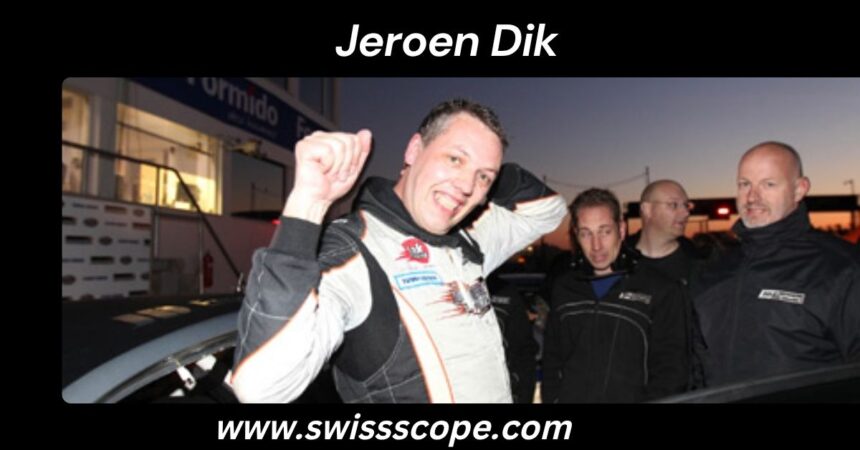

Jeroen Dik is a Dutch automotive tuning specialist, entrepreneur, and racing driver best known for his long connection with JD Engineering and the Volkswagen Group performance community. His professional story combines hands-on vehicle tuning, engine software development, motorsport, and years of practical experience with performance-focused cars.
For many people in the United States, the name Jeroen Dik may first appear in searches related to Volkswagen tuning, Audi performance, ECU remapping, diesel racing, or JD Engineering. Unlike automotive personalities who became famous mainly through television or social media, Dik built much of his reputation through technical work and motorsport competition.
According to JD Engineering’s official history, Jeroen Dik began tuning cars during the 1990s. The company became known for work on Volkswagen G60 models and for a Volkswagen Golf 1 16V G60 project that achieved multiple sprint-racing victories. Over time, JD Engineering developed into a full-time specialist business focused on Volkswagen Group vehicles, including Volkswagen, Audi, SEAT, Škoda, and Porsche.
Dik’s racing career is another important part of his public profile. In 2010, he competed in the Dutch Toerwagen Diesel Cup with a Volkswagen Golf 6 and recorded multiple victories. The following year, he raced a Volkswagen Golf 5 and won the 2011 championship with 211 points. Contemporary motorsport coverage and JD Engineering’s own championship report document this achievement.
This article explains who Jeroen Dik is, what JD Engineering does, why his work matters to automotive enthusiasts, how his racing career developed, and what American readers should understand about European automotive tuning.
Who Is Jeroen Dik?
Jeroen Dik is a Dutch automotive tuner and racing driver whose professional identity is closely associated with JD Engineering, a specialist company based in Lochem, Netherlands.
His career developed around performance automobiles, particularly vehicles from the Volkswagen Group. Rather than focusing on every automobile brand, JD Engineering built its reputation through specialization in Volkswagen, Audi, SEAT, Škoda, and Porsche vehicles. The company says this specialization gives its team detailed knowledge of the technical characteristics of these vehicles and allows it to use brand-specific diagnostic and programming equipment.
Dik’s career is interesting because it connects two areas of automotive performance:
- Road-car tuning
- Competitive motorsport
The first area involves improving the performance and behavior of production vehicles. The second places those engineering decisions under the much harsher conditions of racing.
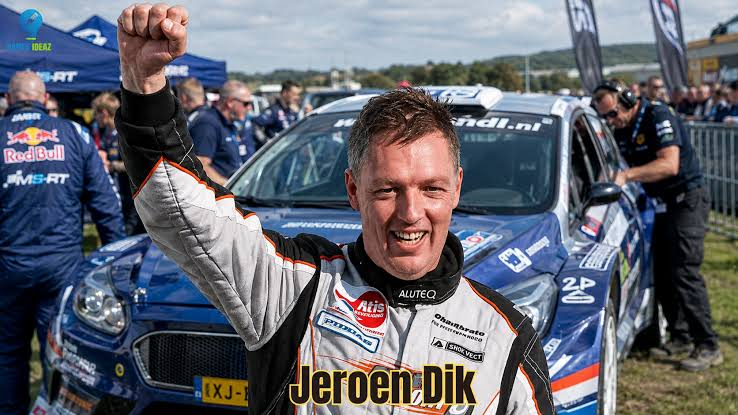
That combination is important when understanding why the Jeroen Dik name has remained relevant in European tuning circles.
What Is Jeroen Dik Known For?
Jeroen Dik is primarily known for three connected areas: JD Engineering, Volkswagen Group performance tuning, and Dutch touring-car racing.
His early tuning work became particularly associated with Volkswagen G60 models. JD Engineering also highlights its Volkswagen Golf 1 16V G60 as an important early project. According to the company, that car won numerous sprint competitions and helped the business gain recognition.
His motorsport career later produced another major achievement. Dik won the 2011 Toerwagen Diesel Cup championship after a competitive season in a Volkswagen Golf 5. The final championship standings listed Dik first with 211 points, ahead of Ferdinand Kool and Henry Zumbrink with 168 points and Ronald Morien and Dennis de Groot with 166.
These achievements help explain the search interest surrounding Jeroen Dik today.
He is not simply a company owner. His public career includes practical tuning experience and direct racing experience.
Jeroen Dik and the Early Years of JD Engineering
JD Engineering’s official history says Jeroen Dik started tuning cars in the 1990s. This was an important period for European automotive tuning because electronic engine management was becoming increasingly important.
Older performance modifications often focused heavily on mechanical components. As electronic control systems became more sophisticated, tuning also became an exercise in understanding software, sensors, fuel delivery, ignition, boost control, and engine management.
The Volkswagen G60 became one of the important platforms in Dik’s early career.
The G60 engine used a supercharger system, creating opportunities for enthusiasts who wanted more performance. Working with these cars required more than simply installing aftermarket parts. A successful performance build had to consider the relationship between airflow, fueling, ignition, temperature, boost, and engine durability.
JD Engineering’s early work with G60 vehicles helped establish the company’s identity.
The company’s history specifically mentions the Volkswagen Golf 1 16V G60 and its success in sprint competitions. That project became part of the foundation for the company’s growth.
The Importance of Volkswagen G60 Tuning
The Volkswagen G60 deserves attention when discussing Jeroen Dik because it represents the type of performance engineering that helped shape JD Engineering.
Also Read: Osteopur: The Ingredients, Bone Health, Benefits, Safety, and What to Know
The G60 was a supercharged Volkswagen engine, and its design made it attractive to performance enthusiasts. The combination of relatively compact dimensions and forced induction created opportunities for modification.
However, increasing engine output is not only about producing more power.
A responsible tuning approach also considers:
- Engine temperature
- Fuel delivery
- Ignition timing
- Airflow
- Boost pressure
- Exhaust temperatures
- Drivetrain capacity
- Cooling
- Software calibration
- Reliability
This is one reason specialized tuners can become influential within particular automotive communities. They learn the weaknesses and strengths of a platform through repeated real-world experience.
Dik’s early Volkswagen work therefore provides useful context for understanding the later focus of JD Engineering.
What Is JD Engineering?
JD Engineering is a Netherlands-based automotive tuning company associated with Jeroen Dik.
The company specializes in Volkswagen Group vehicles. Its official website identifies Volkswagen, Audi, SEAT, Škoda, and Porsche as the major brands within its tuning focus.
The company describes its services around areas such as vehicle tuning, diagnostics, programming, and customized chiptuning.
One important point is that “chiptuning” does not simply mean adding a physical chip to a modern vehicle.
In modern automotive language, the term often refers to changes to the software calibration of an engine control unit, or ECU. The ECU controls many aspects of engine operation, and calibration changes can alter parameters related to torque, boost, fuel delivery, ignition, throttle behavior, and other functions depending on the vehicle.
For American readers, ECU tuning is similar to what is often called an engine remap or performance software tune.
JD Engineering says it uses VAG-specific diagnostic and programming equipment and develops tuning specifically for the relevant engines.
What Does VAG Mean?
VAG is a common term used by European automotive enthusiasts to describe vehicles connected with the Volkswagen Group.
In the context of JD Engineering, the company’s stated focus includes:
- Volkswagen
- Audi
- SEAT
- Škoda
- Porsche
The exact technical relationship between brands can vary by vehicle generation and component, so “VAG” should not be understood as meaning that every model shares identical hardware.
However, the Volkswagen Group has used shared platforms, engines, transmissions, electronic systems, and other technologies across different brands.
That creates an important advantage for a specialist tuner.
Instead of starting from zero with every vehicle, a company with years of VAG experience can build a deep understanding of recurring engineering patterns.
How ECU Tuning Works
ECU tuning is easier to understand when viewed as calibration rather than a simple horsepower switch.
A modern engine constantly receives information from sensors. Depending on the vehicle, these can monitor factors such as:
- Engine speed
- Air pressure
- Air temperature
- Coolant temperature
- Oxygen levels
- Throttle position
- Fuel pressure
- Turbocharger conditions
- Exhaust-related information
The ECU uses this information to control engine operation.
A performance calibration can change how the ECU responds to these inputs.
For a turbocharged engine, for example, a tune may modify boost targets and related control strategies. It may also adjust fuel and ignition parameters within the limits of the engine and its supporting hardware.
The important lesson is that ECU tuning should be treated as an engineering process.
A higher peak horsepower figure is not automatically a better tune.
A good calibration also needs to consider drivability, thermal behavior, traction, transmission limits, emissions requirements, and the intended use of the vehicle.
Why Jeroen Dik’s Racing Background Matters
One of the most interesting aspects of Jeroen Dik’s career is that he did not remain only on the workshop side of performance engineering.
He also raced.
That matters because motorsport exposes vehicles to conditions that ordinary street driving rarely reproduces.
On a race track, an engine may spend extended periods at high load. Brakes, tires, cooling systems, transmissions, and suspension components also experience repeated stress.
Racing can therefore reveal problems that may not appear during normal road use.
Dik’s racing career gave him an environment in which performance, reliability, consistency, and driving technique were tested together.
This does not mean that a racing setup is automatically appropriate for a street car. In fact, the opposite can often be true.
A race car may sacrifice comfort, fuel economy, noise, emissions performance, and long-term road usability in exchange for competitive performance.
The value of motorsport experience is the engineering knowledge it can provide, not the assumption that every race-car modification belongs on a daily driver.
Jeroen Dik in the 2010 Toerwagen Diesel Cup
The Toerwagen Diesel Cup became an important chapter in Dik’s racing career.
In 2010, he competed with a Volkswagen Golf 6. Contemporary race reports document multiple strong results.
For example, during the Hammerite Ultimate Races at Circuit Park Zandvoort, Dik won the second race in a Volkswagen Golf 6 after a close battle with BMW competitors. At that point in the season, he was fighting to reduce a championship points deficit.
Later in the 2010 season, Dik also won a sprint race at Zandvoort in the Golf 6. The contemporary report recorded him taking 20 points and moving closer to the championship leaders.
These results show that his racing involvement was substantial rather than merely symbolic.
He was competing in a series where different diesel-powered touring cars had to balance performance, reliability, race strategy, and regulations.
Why the 2010 Season Was Important
The 2010 season was especially important because Dik came close to winning the championship.
His performances demonstrated that the Volkswagen platform could compete strongly against BMW and other diesel-powered touring cars.
But motorsport championships are not decided by one race.
A driver can win races and still lose a championship through missed points, mechanical problems, penalties, or inconsistent finishes.
That lesson became important in Dik’s following season.
Jeroen Dik Wins the 2011 Toerwagen Diesel Cup
The most significant documented racing achievement in Jeroen Dik’s public career came in 2011.
He won the Toerwagen Diesel Cup championship.
Contemporary motorsport coverage reported that Dik arrived at the final round at Circuit Park Zandvoort as the championship leader. He finished second in the first race of the final weekend, which gave him enough points to mathematically secure the title before the final race.
JD Engineering’s own championship report gives the final standings as:
- Jeroen Dik — 211 points
- Ferdinand Kool / Henry Zumbrink — 168 points
- Ronald Morien / Dennis de Groot — 166 points
- Marcel Roeleveld — 146 points
- Rob Severs — 137 points
The result was significant partly because of what happened the year before.
Dik had been competitive in 2010 but did not win the championship.
In 2011, he completed the job.
The Volkswagen Golf 5 and the 2011 Championship
There is useful historical detail in contemporary race reports about the car Dik used in 2011.
Autosport.nl reported him racing a Volkswagen Golf 5 during the 2011 championship. The same report identifies the Golf 5 in the final round at Circuit Park Zandvoort.
This is worth noting because some later online articles incorrectly or loosely describe his 2011 car as a Golf 6.
The contemporary motorsport record is clearer: Dik’s 2010 campaign included the Golf 6, while his 2011 championship campaign was associated with the Golf 5. JD Engineering’s own championship material also notes that he might bring the Golf 6 from the previous year back for a later championship after the Toerwagen Diesel Cup ended.
This distinction is a good example of why readers should be careful when researching automotive history through secondary websites.
What Made the 2011 Championship Special?
The championship was not simply a story about horsepower.
Dik had to deal with changing technical conditions.
JD Engineering’s championship report explains that the organization worked to keep the cars competitive and equal, which meant teams sometimes had to modify the cars or add weight. Dik described adapting to those changes as one of the season’s challenges.
That detail provides an important insight into motorsport.
Winning is not always about having the most powerful car.
A successful racing program needs to adapt to:
- Sporting regulations
- Technical regulations
- Weight changes
- Tire behavior
- Track conditions
- Race strategy
- Reliability
- Driver consistency
Dik’s 2011 championship therefore adds credibility to the broader story of his career because it shows an ability to operate under changing conditions.
Jeroen Dik’s Approach to Automotive Performance
It is useful to separate documented facts from broad assumptions when discussing a professional tuner.
JD Engineering officially emphasizes specialized VAG knowledge, brand-specific diagnostic equipment, programming, and tailored chiptuning.
From this, one reasonable conclusion is that specialization is central to the company’s professional identity.
That does not mean every JD Engineering tune is identical.
Different vehicles have different engines, transmissions, turbochargers, cooling systems, and intended uses.
A sensible performance calibration should consider the complete vehicle rather than focusing only on a dyno number.
For example, a customer may want:
- Better highway acceleration
- More low-end torque
- Stronger midrange performance
- Improved throttle response
- Track performance
- A balance between performance and daily driving
- Compatibility with hardware modifications
Those goals can require different calibration choices.
Why Reliability Matters in Performance Tuning
One of the most important lessons from professional tuning is that power and reliability are connected.
An engine is designed around limits.
Increasing output can increase stress on:
- Pistons
- Connecting rods
- Bearings
- Turbochargers
- Cooling systems
- Clutches
- Transmissions
- Axles
- Tires
The exact risks depend on the vehicle and modification.
This is why responsible tuning should begin with the vehicle’s condition and intended purpose.
A high-mileage car with worn components may not be a good candidate for aggressive performance modifications.
Likewise, a car used for commuting should not necessarily receive the same calibration as a dedicated track vehicle.
Jeroen Dik and the Difference Between Tuning and Racing
Tuning and racing overlap, but they are not the same thing.
A street car needs to be comfortable, predictable, emissions-compliant where required, and suitable for everyday use.
A race car is built around competition.
It may use:
- Different suspension settings
- Racing tires
- Increased cooling capacity
- More aggressive brakes
- Reduced interior weight
- Specialized engine calibration
- Competition safety equipment
Therefore, readers researching Jeroen Dik should avoid assuming that his racing experience means every racing modification is appropriate for a normal road car.
Instead, the value of his racing background is that it provides additional insight into how vehicles behave under demanding conditions.
Why Jeroen Dik Is Relevant to Volkswagen Enthusiasts
Volkswagen has a large enthusiast community in the United States.
Models such as the Golf GTI, Golf R, Jetta GLI, Golf, Passat, and various Audi models have attracted owners interested in performance upgrades.
European tuning culture can be somewhat different from American tuning culture, but there is significant overlap.
Both communities are interested in:
- ECU tuning
- Turbocharger upgrades
- Intercoolers
- Exhaust systems
- Suspension
- Brakes
- Wheels and tires
- Data logging
- Dyno testing
- Track performance
The Jeroen Dik name is particularly relevant because JD Engineering developed its reputation within a European VAG-focused environment.
What Can American Car Owners Learn From European Tuning?
The biggest lesson is specialization.
A tuning company does not necessarily need to work on every brand to be successful.
Deep knowledge of one vehicle family can be valuable.
A specialist may understand recurring problems, software behavior, engine variations, transmission limits, and compatible hardware combinations more thoroughly than a general workshop.
American vehicle owners can apply the same principle when choosing a tuner.
Instead of asking only, “How much horsepower will I gain?” it can be more useful to ask:
- What hardware does my car have?
- What supporting modifications are required?
- How is the calibration tested?
- Is the car data-logged?
- What happens if a problem occurs?
- Is the tune designed for street or track use?
- Does it affect emissions equipment?
- What fuel is required?
- What happens to warranty coverage?
- What are the expected effects on transmission and drivetrain components?
These questions produce better decisions than focusing on a single advertised horsepower number.
Understanding Dyno Results
Dyno testing is commonly used in automotive tuning, but dyno numbers need context.
A dynamometer measures vehicle or engine performance under controlled conditions.
However, results can vary depending on:
- Dyno type
- Correction method
- Temperature
- Humidity
- Tire pressure
- Vehicle configuration
- Fuel
- Testing procedure
- Gear selection
Therefore, comparing two dyno charts from different shops does not always provide a perfect comparison.
For consumers, the most useful approach is often comparing the same vehicle on the same dyno before and after a modification.
Even then, a dyno number should not be the only measure of success.
Driveability, consistency, temperatures, traction, and reliability can matter just as much.
Why ECU Calibration Requires Specialized Knowledge
Modern engines are complex systems.
An ECU tune interacts with mechanical hardware and software simultaneously.
Changing one parameter can affect others.
For example, increasing boost may require consideration of fueling, ignition, intake temperature, exhaust temperature, turbocharger speed, and drivetrain capacity.
This is why professional tuning is much more than changing a few numbers in a computer file.
A skilled tuner needs to understand how the engine responds.
That knowledge can come from:
- Engineering education
- Workshop experience
- Data logging
- Dyno testing
- Motorsport
- Manufacturer documentation
- Repeated testing
- Experience with specific platforms
Jeroen Dik’s long involvement with VAG tuning and motorsport helps explain why his name became associated with this specialized field.
Is Jeroen Dik Still Active?
As of 2026, the clearest reliable information about Jeroen Dik’s current professional role comes from JD Engineering itself.
The company’s official website continues to identify Jeroen Dik as the owner and describes JD Engineering as a specialist in tuning Volkswagen, Audi, SEAT, Škoda, and Porsche vehicles.
It is important not to exaggerate information about his current personal activities when reliable sources do not provide extensive details.
The strongest evidence concerns his professional connection with JD Engineering.
This is a useful research principle: when information about a public figure’s private life is limited, readers should not fill the gaps with speculation.
Jeroen Dik’s Personal Life and Privacy
There is limited reliable public information about Jeroen Dik’s private life.
Also Read: QuikConsole Com: Complete Guide, Safety Review, Features & Facts
Most credible information about him concerns his professional career, JD Engineering, vehicle tuning, and motorsport.
That means claims about his family, relationships, home life, personal wealth, or other private matters should be treated carefully unless supported by trustworthy primary or high-quality secondary sources.
For an automotive biography, this is not a weakness.
In fact, it reflects a useful distinction between public professional information and private personal information.
Readers should focus on the parts of a person’s career that are documented and relevant.
Is Jeroen Dik’s Net Worth Public?
There is no reliable, authoritative public figure for Jeroen Dik’s personal net worth.
Online articles may publish estimated numbers, but such figures are difficult to verify unless supported by financial records or credible reporting.
JD Engineering is a private business, and the existence or success of a company does not automatically reveal the owner’s personal wealth.
Therefore, websites claiming a precise net worth should be treated cautiously.
A better way to evaluate Dik’s professional success is through documented evidence such as the history of JD Engineering, its specialist market position, and his motorsport achievements.
Why Jeroen Dik’s Story Matters
Jeroen Dik’s career illustrates an important idea in automotive performance: technical credibility is usually built over time.
His public history spans multiple stages.
First came hands-on tuning during the 1990s.
Then came recognition through Volkswagen performance projects.
JD Engineering grew into a professional business.
Dik also competed in touring-car racing.
Finally, he won the Toerwagen Diesel Cup championship in 2011.
Each stage reinforced the next.
The workshop provided technical experience.
Motorsport provided a testing environment.
Business development turned specialist knowledge into a long-term professional operation.
This is what makes his story more interesting than a simple list of horsepower figures.
Jeroen Dik’s Influence on the VAG Tuning Community
It would be difficult to measure an individual’s exact influence across the entire automotive tuning industry.
However, JD Engineering’s longevity and specialist reputation provide evidence that the company became an established name within the VAG enthusiast community.
The company itself states that it has grown into an internationally recognized name among enthusiasts of Volkswagen, Audi, SEAT, Škoda, and Porsche.
That is especially meaningful because VAG tuning is a large and technically demanding field.
The Volkswagen Group has produced many engines and platforms over several decades. A company that specializes in these vehicles can build a deep knowledge base.
Dik’s role in developing that specialist business is therefore an important part of his automotive legacy.
Lessons for People Interested in Car Tuning
The story of Jeroen Dik offers several useful lessons for anyone interested in automotive performance.
Specialization Can Be Powerful
Knowing one vehicle family deeply can be more valuable than having superficial knowledge of many brands.
Racing Can Improve Engineering Understanding
Competition exposes vehicles to stress and conditions that normal road driving cannot reproduce.
Power Is Only One Measure
A good performance vehicle should also be predictable, usable, and appropriate for its purpose.
Testing Matters
Data logging, dyno testing, diagnostics, and repeated evaluation are more reliable than guesswork.
Regulations Matter
Performance modifications may affect emissions, noise, safety, inspection, insurance, or road legality.
Experience Builds Knowledge
Automotive tuning is a field where years of practical experience can be extremely valuable.
Automotive Tuning and U.S. Legal Considerations
American readers should be careful when applying European tuning information to U.S. vehicles.
A modification that is acceptable or common in one country may not be legal for road use in another.
In the United States, emissions-related modifications can be subject to federal and state rules. California, in particular, has strict emissions requirements, and other states may have their own inspection programs.
Before modifying a vehicle, owners should check:
- Federal emissions requirements
- State emissions laws
- Local inspection rules
- Insurance requirements
- Manufacturer warranty conditions
- Noise regulations
- Safety requirements
A performance tune that disables or alters emissions-control equipment can create legal and environmental problems.
The safest approach is to confirm applicable rules before installation rather than assume that a modification is legal because it is sold online or used on vehicles in another country.
Digital Safety When Researching Automotive Tuning
Modern tuning increasingly involves software.
That creates cybersecurity and privacy considerations.
Car owners should be careful when downloading ECU files, diagnostic software, mobile applications, or tuning tools from unknown websites.
Potential risks include:
- Malware
- Fake tuning software
- Stolen payment information
- Unauthorized access to vehicle systems
- Loss of vehicle data
- Fraudulent tuning services
- Fake customer reviews
Consumers should verify that a tuning provider is legitimate before providing payment information, vehicle identification numbers, diagnostic data, or account credentials.
A professional business should be transparent about what information it collects and why.
How to Evaluate a Tuning Company
If you are in the United States and researching a tuner inspired by companies such as JD Engineering, use a structured process.
First, identify the exact vehicle.
Year, model, engine, transmission, and hardware configuration all matter.
Second, identify your objective.
Do you want better daily driving, towing performance, track performance, fuel efficiency, or maximum output?
Third, ask about supporting hardware.
A more powerful tune may require additional cooling, fueling, clutch capacity, brakes, or tires.
Fourth, ask how the calibration is tested.
Data logging and controlled testing are useful signs of a technical process.
Fifth, ask about legality.
A shop should be able to explain whether its modifications affect emissions systems or road compliance.
Finally, look for evidence rather than marketing claims.
Long-term customer experiences, technical documentation, motorsport history, and transparent policies can be more informative than a large horsepower claim.
Jeroen Dik and the Broader History of Automotive Tuning
Jeroen Dik’s career also reflects how automotive tuning has changed.
During earlier decades, performance modifications were often strongly mechanical.
Tuners worked with:
- Carburetors
- Camshafts
- Cylinder heads
- Exhaust systems
- Superchargers
- Turbochargers
- Fuel systems
Modern vehicles still rely on mechanical engineering, but software has become a major part of the performance equation.
Today’s tuner may need to understand both mechanical and digital systems.
This shift makes the Jeroen Dik story especially relevant.
His career began during the transition toward increasingly electronic vehicle control and developed within a world where software calibration became central to performance tuning.
The Difference Between a Tuner and a Manufacturer
It is also important to understand that an aftermarket tuner is not the same as an original equipment manufacturer.
Volkswagen, Audi, and other manufacturers design vehicles for broad markets.
They must balance:
- Cost
- Emissions
- Fuel economy
- Noise
- Reliability
- Warranty
- Climate conditions
- Global regulations
- Manufacturing requirements
A specialist tuner works with a narrower objective.
The customer may want more performance.
That creates opportunities for optimization but also responsibilities.
Changing a vehicle away from its factory specification can affect other components.
This is why responsible tuning requires a system-level approach.
Also Read: ActiveVitalSpark com: What Is It and Is It Safe?
Why Searchers Look for “Jeroen Dik”
The keyword “Jeroen Dik” can have several related search intents.
Some people may want a basic biography.
Others may be looking for:
- JD Engineering
- Volkswagen tuning
- Audi tuning
- ECU tuning
- VAG performance
- Jeroen Dik racing
- Toerwagen Diesel Cup
- Volkswagen Golf tuning
- Dutch motorsport
- Automotive engineering
Understanding this search intent is useful because the name is strongly connected to professional automotive activities rather than entertainment celebrity culture.
For most readers, the most useful answer combines biography with technical and motorsport context.
Frequently Asked Questions About Jeroen Dik
1. Where is JD Engineering located?
JD Engineering is based in Lochem, Netherlands. The company’s official website lists its address as Hanzeweg 22, 7241 CS Lochem.
2. What type of cars does JD Engineering specialize in?
JD Engineering specializes in Volkswagen Group vehicles. Its official information lists Volkswagen, Audi, SEAT, Škoda, and Porsche among the brands covered by its tuning expertise.
3. Did Jeroen Dik win a motorsport championship?
Yes. Jeroen Dik won the 2011 Toerwagen Diesel Cup championship. JD Engineering’s championship report records him finishing first with 211 points.
4. What Volkswagen did Jeroen Dik race in 2011?
Contemporary motorsport coverage identifies Jeroen Dik as racing a Volkswagen Golf 5 during the 2011 Toerwagen Diesel Cup season.
5. When did Jeroen Dik begin tuning cars?
According to JD Engineering’s official history, Jeroen Dik began tuning cars during the 1990s.
6. What was Jeroen Dik’s connection to the Volkswagen G60?
Early in his career, Dik became known for tuning Volkswagen G60 models. JD Engineering also highlights its Volkswagen Golf 1 16V G60, which won multiple sprint competitions and helped the business grow.
7. Did Jeroen Dik race before winning the 2011 title?
Yes. His 2010 Toerwagen Diesel Cup campaign included a Volkswagen Golf 6 and multiple race victories. Contemporary reports document several of those results.
8. Is Jeroen Dik’s personal net worth publicly confirmed?
No reliable public source establishes a verified personal net-worth figure. Online estimates should therefore be treated as speculation unless supported by credible financial evidence.
9. Is JD Engineering the same as Volkswagen Motorsport?
No. JD Engineering is an independent specialist tuning company associated with Jeroen Dik. It should not be confused with Volkswagen’s factory motorsport operations.
10. Is every ECU tune suitable for every car?
No. ECU calibration should be matched to the exact vehicle, engine, hardware, fuel, transmission, intended use, and applicable regulations. A calibration developed for one vehicle should not automatically be assumed to be suitable for another.
Conclusion
Jeroen Dik has built a distinctive place in European automotive performance through a combination of tuning expertise, entrepreneurship, and motorsport experience.
His professional story began with vehicle tuning in the 1990s and grew through work on Volkswagen performance cars. JD Engineering’s history highlights early G60 projects and the successful Volkswagen Golf 1 16V G60 as important steps in the company’s development.
His racing career added another important dimension. After competing successfully in the Toerwagen Diesel Cup, including multiple victories in a Volkswagen Golf 6 during 2010, Dik returned with a Golf 5 and won the 2011 championship. Contemporary race reports and JD Engineering’s own records confirm the title and its 211-point final score.
For American readers, the most useful way to understand Jeroen Dik is not simply as a person associated with fast cars. His career represents the relationship between engineering, software calibration, mechanical knowledge, racing, and specialized automotive businesses.
His story also offers a broader lesson for car enthusiasts: performance is not only about maximum horsepower. Good automotive engineering involves understanding the entire vehicle, testing changes carefully, respecting mechanical limits, and matching modifications to the driver’s actual needs.
That principle remains relevant whether the vehicle is a European performance car in the Netherlands or a Volkswagen, Audi, or other enthusiast vehicle on American roads.
As of 2026, Jeroen Dik’s professional identity remains most clearly connected with JD Engineering and the company’s specialist focus on Volkswagen Group vehicles. The strongest information about his career comes from the company itself and contemporary motorsport records, while claims about his private life or personal finances should be treated cautiously unless independently verified.
For anyone researching Jeroen Dik, JD Engineering, VAG tuning, or European automotive motorsport, his career provides a useful example of how long-term technical experience, competition, and business specialization can come together to create a lasting reputation in the automotive world.