



If you have ever searched for unusual Google tricks, interactive Google Doodles, or hidden Google Easter eggs, you may have come across the term “google zipper.” It sounds like a simple search phrase, but it refers to one of the more creative interactive experiences Google placed on its homepage.
The Google Zipper was not a normal Google feature, software product, or permanent search tool. It was an interactive Google Doodle created to celebrate Gideon Sundback, the Swedish-American inventor associated with the development of the modern zipper. The Doodle appeared on April 24, 2012, which would have been Sundback’s 132nd birthday.
Google’s own Doodle archive confirms that the interactive zipper was created with Doodler Sophia Foster-Dimino and Doodle engineer Kris Hom. The interactive design allowed visitors to pull a large zipper on the Google homepage and reveal search results for “Gideon Sundback.”
The idea was clever because it connected the subject of the Doodle with the way people interacted with it. Instead of simply displaying a picture of a zipper, Google turned the zipper into the main control for the page.
Today, the original Google Zipper is no longer a regular feature on Google Search. However, the Doodle remains part of Google’s historical archive, and fan-made recreations allow people to experience a version of the interaction.
This article explains what Google Zipper was, how it worked, why Google created it, who Gideon Sundback was, why the Doodle became memorable, how the technology behind the animation worked at a high level, and what users should know about Google Zipper today.
What Is Google Zipper?
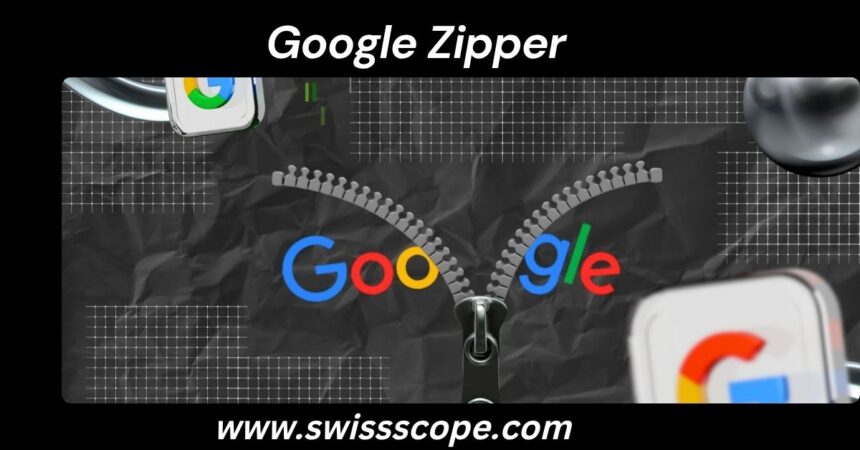
Google Zipper was an interactive Google Doodle that transformed the familiar Google homepage into a large virtual zipper.
Unlike an ordinary logo, the Doodle encouraged users to interact with the screen. A zipper ran through the Google logo, and visitors could pull the zipper handle to open the page.
The purpose was not to provide a conventional game with points, levels, or a winner. Instead, it was an interactive way to tell a story about the zipper and its inventor.
Google’s official archive describes the Doodle as an interactive zipper on the homepage that opened to reveal search results for Gideon Sundback. This is an important detail because many websites now describe Google Zipper as a general “Google game” or a search Easter egg, while the official Google record identifies it specifically as a birthday Doodle.
That distinction helps explain why the feature is sometimes difficult to find today.
The original experience was connected to a specific date and Google homepage event. It was not designed to remain permanently available as part of Google Search.
When Did Google Zipper Appear?
The original Google Zipper Doodle appeared on April 24, 2012.
That date was selected because it was Gideon Sundback’s 132nd birthday. Google created the Doodle as a tribute to his work on the zipper.
Google’s official Doodle archive lists April 24, 2012, as the launch date.
Contemporary reporting from Search Engine Land also documented the special Google logo before its appearance and explained that the Doodle would feature a large zipper running through the Google logo. The report identified Sundback as the person being honored by the Doodle.
This makes 2012 the key year to remember when researching Google Zipper.
Who Was Gideon Sundback?
Gideon Sundback was a Swedish-American engineer and inventor whose work played a major role in the development of the modern zipper.
He was born in Sweden and later moved to the United States. His engineering work focused on fasteners, and his designs helped turn earlier ideas into a more practical zipper system.
Google chose Sundback for the Doodle because the zipper is such a common part of everyday life that many people rarely think about where it came from.
A zipper may appear simple, but its operation depends on careful alignment between two rows of fastening elements and a slider that brings those elements together or separates them.
Google’s Doodle description says Sundback filed a patent related to his zipper work in 1914. Historical patent records also document his separable-fastener work.
The story is more complicated than saying that one person simply invented the zipper from nothing. Earlier fastening systems existed before Sundback, including designs associated with other inventors. Sundback’s importance comes from the improvements that helped create a practical form of the fastener that later became widely used.
That is one reason the Google Doodle was more meaningful than it might first appear.
Why Did Google Create the Google Zipper Doodle?
Google Doodles are often designed to introduce users to people, events, inventions, holidays, or cultural moments.
The zipper was a particularly good subject for an interactive Doodle because its physical action is easy to understand.
When you see a zipper, you already know what you are supposed to do. You grab the pull and move it.
Google used that familiar physical action as the main interaction.
The result was a simple but effective connection between the historical subject and the digital experience.
Instead of asking users to read a long explanation about Gideon Sundback first, Google allowed them to interact with a virtual zipper and then discover information about the inventor.
This is one of the strongest design choices behind the Google Zipper.
How Did Google Zipper Work?
At a high level, Google Zipper worked by turning the homepage into an interactive visual interface.
The zipper was not a physical object. It was created digitally and responded to user interaction.
When a visitor interacted with the zipper pull, the page visually opened.
Also Read: Thesindi com: The Online Platform, Features, Safety, and Digital Resources
The original Doodle used web-based interactive techniques to make the zipper movement appear connected to the user’s action. Contemporary descriptions of the experience and later recreations commonly describe the effect as an animated split or opening of the page.
The important part was not simply moving an image.
The page had to respond in a way that made the user feel that they were actually opening something.
That feeling is what made the interaction memorable.
The Role of HTML and CSS in the Google Zipper Effect
The Google Zipper experience is often discussed in connection with dynamic HTML and CSS-based animation.
Dynamic HTML, commonly shortened to DHTML, refers to the use of HTML, CSS, JavaScript, and browser behavior to change a webpage while the user is interacting with it.
A modern interactive webpage can change the position, size, appearance, and behavior of elements without loading a completely new page.
For an effect such as a virtual zipper, developers can create separate visual elements, position them carefully, and change their location or appearance in response to user input.
CSS can control visual properties such as positioning, dimensions, clipping, transformations, and transitions.
JavaScript can detect interaction and update the page.
Together, these technologies can create the impression that a page is physically opening.
The exact original implementation should not be assumed from modern fan recreations. Many websites recreate the appearance using their own code, and their implementation may be very different from Google’s original production code.
That distinction is important when discussing the technical history of Google Zipper.
Was Google Zipper a Game?
Google Zipper is sometimes called a game, but that description is not completely accurate.
It was better understood as an interactive Doodle or interactive web experience.
Traditional games usually have rules, objectives, challenges, scoring, or progression.
Google Zipper did not require users to defeat an opponent, reach a high score, or complete multiple levels.
The goal was simply to interact with the zipper.
This is why calling it an “interactive Google Doodle” is more precise than calling it a game.
However, calling it a Google Zipper game is understandable because users could actively control what happened on the screen.
Many modern websites also use the word “game” because people search for Google Zipper with that phrase.
What Happened When You Pulled the Zipper?
The central attraction was the zipper movement.
Users could interact with the zipper pull and open the Google homepage visually.
The action was designed to feel similar to opening a real zipper on clothing or a bag.
Behind the zipper interaction was information connected to Gideon Sundback.
Google’s official archive specifically says that the zipper opened to reveal search results for “Gideon Sundback.”
This was a smart information-design decision.
The animation attracted attention, but the historical information gave the interaction a purpose.
The user was not simply watching an animation. The animation became an entrance to information.
Why Was Google Zipper So Memorable?
One reason Google Zipper remained memorable is that it used a very simple idea.
Google did not need to build a complicated game.
The company took something people already understood—a zipper—and placed it directly into the interface.
That made the interaction almost self-explanatory.
A person did not need a long instruction manual.
See zipper.
Grab zipper.
Pull zipper.
See what happens.
This is a powerful principle in user-interface design.
Good interactive design often uses familiar actions so people can understand what to do without thinking too much.
The Google Zipper Doodle also benefited from surprise.
People normally expect the Google homepage to behave in a predictable way. When the page suddenly became interactive, the contrast made the experience more interesting.
Google Zipper and the Power of Surprise
Surprise is one of the reasons Google Doodles became such an important part of the Google homepage experience.
Search is usually functional.
A person visits Google because they want an answer, website, product, map, image, or other information.
The Google Zipper Doodle briefly changed that expectation.
Instead of immediately searching, the visitor was invited to interact.
That moment of surprise could make a routine visit to a search engine more memorable.
From a design perspective, this is useful because it shows that small interactions can have a large emotional effect.
The experience did not need to last for hours.
A few seconds of interaction could be enough.
Google Zipper Was More Than an Animation
It would be easy to look at Google Zipper and think it was simply a visual trick.
But the Doodle had a deeper communication strategy.
The interaction represented the invention itself.
A zipper is something people operate physically.
Google translated that physical experience into a digital action.
This is an example of skeuomorphic or metaphor-based interface thinking, where digital elements borrow familiar ideas from the physical world.
A digital zipper behaves like a real zipper.
That makes the interface easier to understand.
This concept remains relevant today because modern websites and apps continue to use familiar physical metaphors.
The Connection Between the Doodle and Search
Another clever part of Google Zipper was its connection to search.
Google did not simply show an unrelated animation.
The Doodle opened into search results associated with Gideon Sundback.
Google’s own description confirms this connection.
This created a simple information journey:
First, the user sees the zipper.
Second, the user interacts with the zipper.
Third, the user discovers the person behind the invention.
That structure is effective educational design.
It starts with curiosity and leads toward information.
Is Google Zipper Still Available on Google?
The original Google Zipper Doodle is not a permanent feature of the current Google homepage.
Google Doodles are often tied to specific events or dates, although Google preserves many of them in its online archive.
The official Google Doodles page continues to preserve the Gideon Sundback Doodle and identifies its original launch date as April 24, 2012.
This means that people searching for “Google Zipper” today may see different versions of the experience online.
Some are historical references.
Some are video demonstrations.
Some are fan-made recreations.
Some websites may call their own interactive version “Google Zipper.”
These should not automatically be treated as the original Google implementation.
Can You Play Google Zipper Today?
You cannot expect the original Google Zipper to appear simply by visiting Google Search today.
However, archived and recreated versions of the experience are available on third-party websites.
One well-known example is elgooG, which maintains a recreation of the old zipper experience and identifies the original as a 2012 Google Doodle that was discontinued by Google.
Users should understand that a third-party recreation is not the same thing as the official Google homepage.
If you visit a recreation, check the website address carefully and avoid downloading unknown files or browser extensions simply to experience an old web animation.
A simple interactive page should not require you to install suspicious software.
Google Zipper vs. the Official Google Doodle
There is an important difference between the original Google Doodle and modern recreation websites.
The official Doodle was created by Google and appeared on Google’s homepage in 2012.
Recreation websites are independently maintained.
The purpose of a recreation is usually preservation and entertainment.
For historical research, the official Google Doodles archive should be treated as the strongest source for confirming the original date, purpose, and connection to Gideon Sundback.
Third-party recreations can still be useful because they may let users interact with an experience that is no longer live on Google.
But they should be described as recreations rather than the original Google feature.
Why Did Google Retire Google Zipper?
Google does not appear to have published a detailed public explanation specifically saying, “We retired Google Zipper because of these exact technical reasons.”
That means claims about the exact reason for its removal should be treated carefully.
It is reasonable to say that the Doodle was a limited-time event created for a specific birthday celebration.
Google’s official archive confirms the Doodle launched on April 24, 2012, rather than describing it as a permanent search feature.
Therefore, it is more accurate to say that the original Google Zipper was a temporary Doodle and is no longer part of the normal Google homepage experience.
Some websites speculate that changing web standards, browser compatibility, performance, or Google’s changing homepage design contributed to its disappearance.
Those explanations may sound reasonable, but they should not be presented as confirmed facts unless supported by direct Google documentation.
This is an important example of why trustworthy technology writing should separate verified information from reasonable speculation.
What Made the Google Zipper Design Smart?
The design had several strengths.
First, it was easy to understand.
Second, it connected directly to the subject.
Third, it was interactive rather than passive.
Fourth, it was short enough that users could experience it quickly.
Fifth, it connected entertainment with education.
These qualities explain why a small Doodle could remain interesting years after its original appearance.
Google Zipper as an Example of User Experience Design
Modern web designers can learn a lot from Google Zipper.
A website does not always need a complex interface to create engagement.
Sometimes the best interaction is one that requires almost no explanation.
Imagine visiting a page about the history of zippers.
A large virtual zipper appears.
You naturally want to pull it.
That action creates curiosity.
Then the page gives you information.
The design has guided you from curiosity to learning without forcing you through a complicated menu.
This is a strong user-experience pattern.
What Developers Can Learn From Google Zipper
Developers can also learn from the concept behind the Doodle.
An interactive effect should have a reason.
Animation should support the content instead of distracting from it.
The Google Zipper concept works because the animation is connected to the topic.
If a webpage about cooking suddenly has a spinning car animation, the effect may feel random.
If a webpage about cars uses an interactive steering wheel, the interaction has meaning.
The difference is context.
Google Zipper is a good example of contextual interaction.
A Simple Technical Model of a Zipper Animation
Although the exact original Google code should not be assumed, it is possible to understand the basic idea using modern web concepts.
A developer could create a page with two large visual panels.
The panels could represent the left and right sides of the Google homepage.
A zipper element could be placed between them.
When the user drags the zipper handle, JavaScript could calculate the vertical position of the pointer.
That value could then be used to change the position of the panels.
CSS transformations or clipping could create the visual impression that the page is opening.
The basic logic might look like this conceptually:
User begins dragging.
The browser tracks pointer movement.
Also Read: USPhoneLookup: The Phone Number Lookup, Reverse Search, Privacy, Safety, and Legitimate Uses
The program calculates the new zipper position.
The page panels respond to that position.
The background becomes visible.
The user releases the zipper.
The interface stays at the selected position or returns to a defined state.
This simple interaction demonstrates how a familiar physical movement can be recreated digitally.
Why Smooth Animation Matters
Imagine a zipper that jumps from the top of the page to the bottom without following your movement.
It would not feel realistic.
The original Google Zipper was memorable partly because the interaction was designed to feel connected to the user’s movement.
Good animation creates a sense of cause and effect.
When you move the pointer, the interface responds.
When the response is immediate and smooth, the experience feels natural.
This is an important lesson for modern web developers.
Animation is not only about making a website look attractive.
It is also about communicating relationships between user actions and system responses.
Google Zipper and Mobile Devices
The original Doodle was created during an era when mobile web use was already becoming increasingly important.
However, users should be careful when reading modern claims about exactly how every version behaved on every device.
Different browsers, screen sizes, and later recreations can behave differently.
A third-party Google Zipper recreation may support touch gestures even if the original implementation behaved differently.
Therefore, statements such as “Google Zipper worked exactly the same on every phone” should be avoided unless supported by documentation.
This is another area where separating the original Doodle from modern recreations improves accuracy.
Why People Still Search for Google Zipper
There are several reasons people continue to search for Google Zipper.
Some users remember seeing the Doodle.
Others discover it through lists of Google Easter eggs.
Some people are interested in old Google Doodles.
Web designers may want to study its interaction.
History and technology enthusiasts may want to learn about Gideon Sundback.
There is also a nostalgia factor.
The internet changes quickly.
Interactive experiences that were once common can disappear as websites are redesigned.
Old Google Doodles therefore become small pieces of web history.
Google Zipper and Internet Nostalgia
Internet nostalgia is not only about old social networks or video games.
It also includes small interactions that people experienced while browsing.
Google’s homepage was particularly powerful in this regard because millions of people saw it regularly.
A temporary Doodle could therefore reach a very large audience.
People might remember a strange logo, a game, or an animation even if they never learned its historical purpose at the time.
Years later, they may search for it.
Google Zipper fits this pattern well.
Other Google Interactive Doodles
Google has created many interactive Doodles over the years.
Some have been games.
Others have involved music, sports, science, art, history, or cultural events.
The important point is that Google Doodles can serve more than one purpose.
They can celebrate a person while also providing an engaging interface.
Google Zipper is a particularly clear example because the interaction itself represented the invention being celebrated.
Why Google Doodles Matter
Google Doodles have become part of internet culture because they turn a familiar logo into a temporary storytelling tool.
A normal logo tells users who operates a website.
An interactive Doodle can tell users something about the world.
In the case of Google Zipper, the Doodle introduced users to Gideon Sundback and the history of the zipper.
The interaction made the historical subject easier to remember.
This is a useful lesson for educators, marketers, and web designers.
Information becomes more memorable when people can interact with it.
The History of the Modern Zipper
To understand why Google selected Sundback, it helps to understand the history of the zipper.
The zipper was not created in a single moment by one inventor.
Earlier fastening ideas existed before Sundback.
Inventors developed different forms of hooks, clasps, fasteners, and continuous closures.
Gideon Sundback’s work was important because he improved the design of separable fasteners and helped create a more practical system.
Google’s Doodle description focuses on his contribution to zipper development rather than suggesting that the entire concept appeared from nowhere.
Patent records also show Sundback’s work on separable fasteners.
How a Real Zipper Works
A typical zipper has several main parts.
There are two fabric tapes.
There are rows of teeth or fastening elements.
There is a slider.
There is usually a pull tab attached to the slider.
Depending on the zipper design, there can also be stops or other components.
When the slider moves in one direction, it guides the two rows of fastening elements together.
When it moves in the opposite direction, it separates them.
This simple mechanical action is extremely useful.
Zippers are found in clothing, bags, luggage, outdoor equipment, footwear, and many other products.
Types of Zippers
Modern zippers come in several forms.
Metal zippers use metal teeth.
Molded plastic zippers use individually molded fastening elements.
Coil zippers use a continuous coil structure.
Water-resistant or specialized zippers can be designed for outdoor equipment and other demanding applications.
The correct zipper depends on the product.
A lightweight zipper may be ideal for clothing, while a heavier zipper may be needed for luggage or outdoor equipment.
This real-world variety makes the simple Google Zipper animation even more interesting.
Google took a complex physical invention and reduced its basic interaction to one clear movement.
Why the Zipper Is Such a Good Digital Metaphor
The zipper is visually recognizable.
It has a clear beginning and end.
It has an obvious direction.
It creates a visible opening.
It can be controlled with a simple movement.
All of these qualities make it suitable for digital interaction.
A designer does not need to explain what a zipper is before showing a user how to interact with one.
That is exactly what makes metaphors powerful in interface design.
Google Zipper and Digital Storytelling
Digital storytelling often works best when users participate.
A traditional article asks users to read.
A video asks users to watch.
An interactive experience asks users to do something.
Google Zipper combined all three ideas in a very small package.
The user saw a visual design, interacted with it, and was directed toward information about Sundback.
That is a compact storytelling experience.
What Google Zipper Teaches About Simplicity
One of the biggest lessons from Google Zipper is that simplicity can be more powerful than complexity.
The interaction did not need dozens of buttons.
It did not need a complicated tutorial.
It did not need a scoring system.
The zipper itself communicated what users should do.
For websites and applications, this is an important principle.
If users need a long explanation to understand a basic interaction, the interface may be doing too much.
Sometimes the best design is the one users understand immediately.
Google Zipper and SEO
From an SEO perspective, the phrase “google zipper” has an unusual search intent.
Some users want to know what Google Zipper was.
Some want to play a recreation.
Some want to learn about the Google Doodle.
Some want information about Gideon Sundback.
Others may be searching for the technical idea behind the animation.
A high-quality article should address these different intents without stuffing the exact keyword into every paragraph.
Repeating “google zipper” unnaturally would make an article harder to read.
A better approach is to use the exact keyword naturally and support it with related phrases such as Google Zipper Easter egg, Google Zipper Doodle, interactive Google Doodle, zipper Google Doodle, Gideon Sundback Doodle, Google Easter eggs, interactive Google homepage, and Google Doodle history.
That creates broader topical coverage while keeping the article readable.
Why Keyword Stuffing Is Not a Good Strategy
Search engines are designed to understand meaning and context.
An article that repeats the same keyword in every sentence can sound artificial.
Also Read: SSIS-950: Understanding SSIS, Package Versions, and SQL Server Integration
For example, writing “Google Zipper was a Google Zipper that showed the Google Zipper on Google Zipper” would provide almost no useful information.
A better article explains the subject naturally.
The exact phrase can appear in important locations such as the title, introduction, relevant headings, and selected paragraphs.
Related terms can appear where they make sense.
The result is better for both users and search engines.
Building Trustworthy Content About Google Zipper
Because many third-party websites describe Google Zipper differently, trustworthy content should distinguish confirmed facts from assumptions.
The strongest fact is that Google itself has an archived Doodle for Gideon Sundback dated April 24, 2012.
Google’s archive also identifies the Doodle’s creators and explains that the interactive zipper revealed search results related to Sundback.
Contemporary technology reporting provides additional historical context about the Doodle’s appearance.
For technical details, however, modern recreation websites should not automatically be treated as evidence of Google’s original code.
This approach makes the article more reliable.
Common Misunderstandings About Google Zipper
One common misunderstanding is that Google Zipper is a permanent Google Search feature.
It is not.
The original experience was a temporary Doodle.
Another misunderstanding is that it was a traditional game.
It was primarily an interactive Doodle.
Another mistake is assuming every website offering a Google Zipper today is operated by Google.
That is not necessarily true.
Some websites provide independent recreations.
Finally, some articles describe the feature as if its exact technical implementation is publicly documented in detail.
That should be approached carefully.
The official Google source confirms what the Doodle did, but it does not provide a full public technical breakdown of every implementation detail.
Is Google Zipper Safe to Use Today?
The original Google Doodle was part of Google’s website.
Modern recreations are different.
If you choose to visit an archived or recreated version, use normal web-safety practices.
Check the website address.
Avoid downloading unknown programs.
Do not install browser extensions simply because a website says they are required for a simple animation.
Do not enter passwords or financial information on an unfamiliar recreation site.
The safest way to research the historical Doodle is to start with Google’s official Doodle archive.
Google Zipper as a Piece of Web History
The Google Zipper Doodle belongs to an interesting period in web design.
Browsers were becoming more capable of handling rich interactive experiences directly in webpages.
Developers were experimenting with JavaScript, CSS animation, responsive layouts, touch interaction, and other techniques.
At the same time, users were becoming accustomed to websites responding immediately to their actions.
The Google Zipper Doodle captured that trend in a very simple form.
It demonstrated that a search homepage could temporarily become an interactive digital object.
Why the Doodle Still Matters in 2026
In 2026, the original Google Zipper is more valuable as an example of digital history than as a current Google Search feature.
The web has changed dramatically since 2012.
Modern browsers support more powerful animation and graphics technologies.
Websites can now create sophisticated 3D environments, advanced transitions, interactive illustrations, and real-time applications.
Yet the basic design lesson remains unchanged.
People enjoy interfaces that respond naturally to their actions.
The Google Zipper Doodle showed this principle clearly more than a decade ago.
Could a Modern Developer Recreate Google Zipper?
Yes.
A developer with knowledge of HTML, CSS, and JavaScript could create a modern zipper-style interface.
The implementation could use pointer events for mouse and touch interaction.
CSS transformations could control movement.
Clipping or masking could make the page appear to separate.
Animations could provide smooth movement.
Accessibility features could allow keyboard interaction.
Responsive design could adapt the experience to different screen sizes.
Modern developers could also improve on older interaction patterns by supporting touchscreens, keyboard controls, reduced-motion preferences, and screen-reader-friendly alternatives.
That would make a modern version more accessible than many older web experiments.
Accessibility Lessons From Google Zipper
Interactive design should not depend on a single type of physical movement.
A mouse-based interaction may work well for desktop users but be difficult for people using keyboards, touchscreens, assistive technology, or alternative input devices.
A modern recreation could therefore include multiple ways to operate the zipper.
For example, keyboard controls could provide an alternative to dragging.
A visible button could provide another option.
The page could also respect users who prefer reduced motion.
These improvements demonstrate how web development has evolved.
Google Zipper and the Future of Interactive Web Design
The core idea behind Google Zipper remains relevant.
Websites can use familiar physical objects as digital controls.
A zipper can open a page.
A book can turn pages.
A slider can adjust a value.
A dial can control a setting.
A map can be dragged.
These interactions work because they connect digital behavior with physical experience.
Modern interfaces may be much more advanced than the 2012 Google Doodle, but the basic idea remains useful.
The Biggest Lesson From Google Zipper
The biggest lesson is not about zippers.
It is about curiosity.
Google created something that made users wonder what would happen if they pulled the zipper.
That curiosity encouraged interaction.
Interaction then led to information about Gideon Sundback.
This is a simple but powerful communication pattern:
Create curiosity.
Invite action.
Reward the action.
Provide useful information.
That formula can work in education, marketing, product design, and web development.
Frequently Asked Questions About Google Zipper
What is Google Zipper?
Google Zipper was an interactive Google Doodle created for Gideon Sundback’s 132nd birthday on April 24, 2012. Users could interact with a large zipper on the Google homepage, which opened to reveal search results related to Sundback.
Was Google Zipper made by Google?
Yes. The original Google Zipper experience was an official Google Doodle. Google’s archive identifies the Doodle as the Gideon Sundback 132nd Birthday Doodle.
When was Google Zipper released?
The original Doodle launched on April 24, 2012.
Why did Google make a zipper Doodle?
Google created the interactive Doodle to celebrate Gideon Sundback and his work related to the modern zipper. The interactive design used a zipper because the invention itself could be represented through a simple pull-and-open action.
Who invented the zipper?
The history of the zipper involves several inventors and earlier fastening systems. Gideon Sundback played a major role in developing and improving the modern separable fastener. His patent work is documented in historical patent records.
Is Google Zipper still on Google Search?
The original Google Zipper is not a permanent Google Search feature today. It remains preserved in Google’s Doodle archive.
Can I play Google Zipper today?
You may find independent recreations online. These are not necessarily the original Google implementation. One example is the preserved recreation maintained by elgooG.
Is Google Zipper a game?
It is more accurately described as an interactive Google Doodle. Some websites call it a game because users can control the zipper, but it does not have the traditional scoring or level structure of a conventional game.
What did the Google Zipper reveal?
According to Google’s official Doodle description, the zipper opened to reveal search results for Gideon Sundback.
Did Google Zipper teach users about zippers?
Indirectly, yes. The Doodle celebrated Sundback and directed users toward information about him. Its interactive design encouraged people to learn more about the history of the zipper.
Was Google Zipper an Easter egg?
It is commonly described online as a Google Easter egg because it was an unusual hidden or temporary interactive feature. More precisely, the original experience was an official Google Doodle.
Was Google Zipper available for one day?
The original Doodle launched on April 24, 2012, for Sundback’s birthday. Google’s archive preserves the Doodle, but the original homepage experience was not designed as a permanent Google Search feature.
Did Google Zipper use HTML and CSS?
Interactive web effects such as the Google Zipper can be produced with HTML, CSS, and JavaScript. However, modern recreation sites may use their own implementation, so the code used by a recreation should not automatically be presented as Google’s original source code.
Why do people still search for Google Zipper?
People search for it because they remember the original Doodle, want to experience an old Google interaction, are interested in Google Easter eggs, or want to learn about Gideon Sundback and the history of the zipper.
Is Google Zipper related to Google Chrome?
Not directly. Google Zipper was a Google homepage Doodle. It was not a special Chrome feature or a built-in Chrome browser tool.
Is Google Zipper related to ZIP files?
No. The Google Zipper Doodle is about the physical zipper fastener and Gideon Sundback. It is not related to ZIP file compression.
Is Google Zipper related to Google Drive ZIP files?
No. Google Zipper and ZIP file compression are completely different topics. The word “zip” can refer to different concepts depending on context.
Can Google Zipper be used as a web-development project?
Yes. A zipper-style interaction can be a useful practice project for learning HTML, CSS animation, JavaScript pointer events, responsive design, and accessibility.
What can designers learn from Google Zipper?
Designers can learn the value of simple interactions, familiar metaphors, visual feedback, curiosity, and strong connections between an interface and its subject.
What is the official source for Google Zipper?
The most reliable historical source is Google’s official Doodle archive for Gideon Sundback’s 132nd Birthday. It identifies the date, purpose, creators, and interactive concept.
Final Thoughts on Google Zipper
Google Zipper remains a fascinating example of how a simple idea can turn an ordinary webpage into an engaging experience.
The original Doodle appeared on April 24, 2012, to celebrate Gideon Sundback’s 132nd birthday. Google transformed the zipper from a physical fastening device into an interactive digital control. Pulling the zipper became a way to discover information about the inventor and his contribution to zipper development.
What makes Google Zipper interesting today is not simply nostalgia.
It demonstrates several principles that are still important in modern web design.
The first is simplicity. Users understood the interaction without needing complicated instructions.
The second is relevance. The zipper animation was directly connected to the subject being celebrated.
The third is curiosity. The interaction encouraged people to discover what would happen when they pulled the zipper.
The fourth is storytelling. The visual experience led users toward information about Gideon Sundback.
The fifth is usability. A familiar physical action became an intuitive digital interaction.
Although the original Google Zipper is no longer a regular part of Google Search, Google’s official archive keeps the Doodle available as a piece of its history. Independent recreations also demonstrate how strongly people remember the experience.
For people interested in Google Easter eggs, Google Doodles, web development, internet history, or interactive design, Google Zipper is more than an old homepage trick.
It is a small example of thoughtful digital storytelling.
The experience also offers a useful reminder for today’s websites: technology does not always need to be complicated to be memorable. A familiar idea, a clear interaction, and a meaningful reason for that interaction can create an experience users remember for years.
That is ultimately why Google Zipper continues to attract attention long after its original appearance.