



Key Takeaways
- Improved coordination among emergency responders leads to faster incident resolution.
- Utilizing modern technology enhances real-time information sharing.
- Clear communication reduces confusion and panic among the public.
Swift and reliable communication forms the backbone of any effective emergency response. In critical situations where every moment counts, reducing delays and misunderstandings can save lives and protect property. Streamlined emergency communication protocols connect organizations and responders, allowing them to act quickly, share accurate information, and coordinate resources more effectively. For organizations seeking innovative solutions to enhance their emergency readiness, click here to explore how direct communication integration can improve emergency response times.
From advanced technology to well-trained personnel, refining how information flows during a crisis is essential for preventing confusion and ensuring a unified response strategy. Modern advancements have enabled emergency crews to bridge the gap between themselves and the communities they serve, reinforcing public trust and improving safety outcomes.
Enhanced Coordination Among Emergency Responders
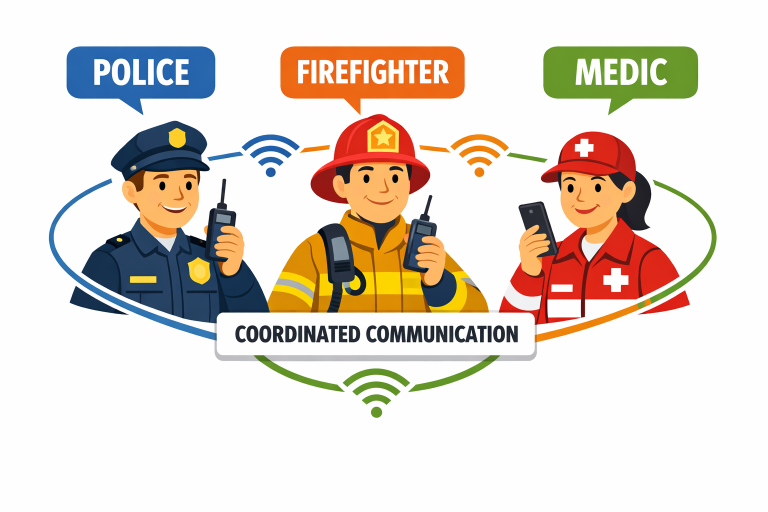
Emergency situations often require seamless collaboration between multiple agencies such as police, fire departments, emergency medical services, and utilities. Streamlined protocols dismantle communication silos, enabling these agencies to share critical information, assign tasks, and avoid resource overlap. With a standardized communication process in place, responders are better equipped to assess the situation, allocate personnel and equipment, and address evolving threats on the ground. This leads to faster incident resolution and prevents duplicate efforts, ultimately benefiting the communities they serve.
One crucial aspect of coordination is the development of interoperable communication systems. These allow various agencies to communicate using a shared platform or set of standards, rather than relying on incompatible equipment or procedures. This technical interoperability complements procedural unity, creating a cohesive response framework that can adapt to diverse emergencies, such as natural disasters, mass-casualty incidents, or infrastructure failures. Additionally, regular inter-agency briefings and unified command training help build trust and understanding among responders who might be meeting for the first time during a critical event.
Integration of Modern Technology
Recent technological advancements have transformed emergency communication. Tools like Bluetooth Low Energy (BLE) beacons allow for live occupancy monitoring and navigation within large facilities, which is particularly helpful during evacuations. Mobile apps, digital alert systems, and cloud-based communication hubs enable information to reach responders and the public in real time, increasing the likelihood of successful intervention. Integrating these technologies with traditional voice and radio systems connects everyone involved in the response, making sure no one is left out of the communication loop. As highlighted by SDM Magazine, continuous upgrades to emergency alert infrastructure further enable precise, reliable messaging.
Innovation in artificial intelligence and data analytics is providing new ways to analyze incoming data during emergencies, such as determining the severity and exact location of incidents. Predictive analytics can assist command centers in forecasting resource needs, while automated translation tools help bridge language barriers with multicultural populations. With the rapid rise of the Internet of Things (IoT), sensors embedded in smart buildings, vehicles, and public infrastructure further increase situational awareness for decision-makers.
Improved Public Awareness and Response
Clear, consistent communication does more than help first responders. It also ensures that the public remains informed and prepared. Effective emergency communication platforms send alerts about evolving dangers, transportation interruptions, shelter locations, and safety recommendations. Reducing ambiguous messages and using multiple channels, such as SMS, email, and social media, helps organizations better reach a diverse audience. Well-informed communities are more likely to follow authorities’ guidance, evacuate efficiently, and take shelter when necessary, thereby minimizing injuries and confusion during emergencies.
Public education initiatives, such as community preparedness workshops and multilingual awareness campaigns, also play a pivotal role in ensuring everyone understands how to respond to different types of emergencies. Some organizations now employ geotargeting to send relevant alerts based on a recipient’s precise location, ensuring the right people receive the right information at the critical moment. By prioritizing inclusivity and accessibility, emergency communication becomes more equitable, leaving fewer gaps in community preparedness and response.
Case Studies of Effective Communication
Airports present some of the most complex emergency communication environments. Case studies show that airports using integrated multimedia solutions can link telephony, radios, and digital alerts from a single control center, enabling staff to provide coordinated instructions to travelers and employees. This centralized approach reduces miscommunication and supports faster problem resolution, as demonstrated in various international airport case studies detailed by SDM Magazine. Lessons learned from these environments are now being applied in hospitals, educational institutions, and public spaces to further streamline emergency responses.
Other real-world examples highlight the importance of regular protocol reviews and after-action reports. Cities that conduct structured debriefings after events such as major storms or public health incidents tend to improve their protocols more rapidly. The results of these reviews frequently lead to technology upgrades or changes in standard operating procedures. Furthermore, simulated incident exercises allow teams to test their communication systems in a low-risk environment, enabling weaknesses to be addressed before a real event occurs.
Best Practices for Streamlining Communication
- Develop comprehensive emergency communication plans that outline roles and responsibilities in advance to reduce confusion during actual incidents.
- Train personnel regularly not only on the protocols themselves but also on the technologies supporting communication, ensuring teams are confident using all available tools.
- Use multiple communication channels, voice, digital, and visual, to reach every stakeholder, accounting for accessibility needs and potential technology failures.
- Conduct regular drills and practice sessions to identify weak spots and refine strategies based on real-world performance.
- Leverage feedback from both responders and the public after each incident to continuously improve communication strategies and protocols.
- Stay current with innovations in communication technologies and implement upgrades that enhance system resilience and speed.
It is also beneficial to develop relationships with local community leaders and organizations, as these trusted voices can help distribute urgent messages in hard-to-reach populations. Establishing mutual aid agreements with neighboring jurisdictions further ensures that communication flows smoothly across boundaries during large-scale emergencies that exceed the resources of one individual agency.
Final Thoughts
Streamlining emergency communication protocols is essential for enhancing the overall effectiveness of any crisis response. Organizations that invest in training, technology, and communication planning not only improve coordination among responders but also protect the communities they serve. By focusing on the clarity, reach, and speed of emergency messaging, organizations can ensure they are prepared for any scenario, making communities safer, reducing chaos, and saving lives.
Ultimately, the ongoing process of evaluating, updating, and practicing emergency communications protocols ensures persistent readiness. As threats evolve and technology advances, adaptation remains key. In a dynamic world, organizations that prioritize robust and streamlined emergency communication will consistently outperform those that do not, safeguarding people and property more effectively now and into the future.
- How to Build Realistic Product Color Variants From One Photo
- How To Design Trustworthy Real-Time AI Avatars For Public-Facing Services
- TechTrendery.com: A Complete Guide to Technology, AI, Business and Digital Trends
- Jeroen Dik: Biography, JD Engineering, Automotive Tuning and Racing Career
- Osteopur: The Ingredients, Bone Health, Benefits, Safety, and What to Know